

SOHC vs. DOHC: What’s the Difference and Which Is Better?
When shopping for a new car or diving into the world of engines, you’ve probably heard the terms SOHC and DOHC. These acronyms stand for Single Overhead Camshaft and Dual Overhead Camshaft, and they play a big role in how your engine performs. But what exactly do they mean? And which one is better for your needs? Let’s explore the key differences between SOHC and DOHC engines in a way that’s easy to understand.
How Camshafts and Valves Work
To understand SOHC and DOHC, you first need to know what camshafts and valves do.
- Camshafts: These components control the opening and closing of your engine’s valves. As the camshaft rotates, its lobes push against the valves, allowing air and fuel to enter the cylinders and exhaust gases to exit.
- Valves: There are two types of valves—intake valves (which let air and fuel in) and exhaust valves (which release exhaust gases).
The camshaft’s job is crucial for the timing of your engine, which directly affects power, efficiency, and overall performance.
What Are the Different Camshaft Location Classifications?
Engines can be classified by how camshafts are positioned:
| Type | Description | Example |
| OHV (Overhead Valve) | The camshaft is located in the engine block and uses pushrods to operate valves. | Found in older engines. |
| SOHC (Single Overhead Camshaft) | A single camshaft located above the cylinder head controls both intake and exhaust valves. | Common in compact engines. |
| DOHC (Dual Overhead Camshaft) | Two camshafts above the cylinder head—one for intake and one for exhaust valves. | Found in high-performance cars. |
Modern engines primarily use SOHC and DOHC configurations for improved efficiency and performance.
What Is an SOHC Engine?
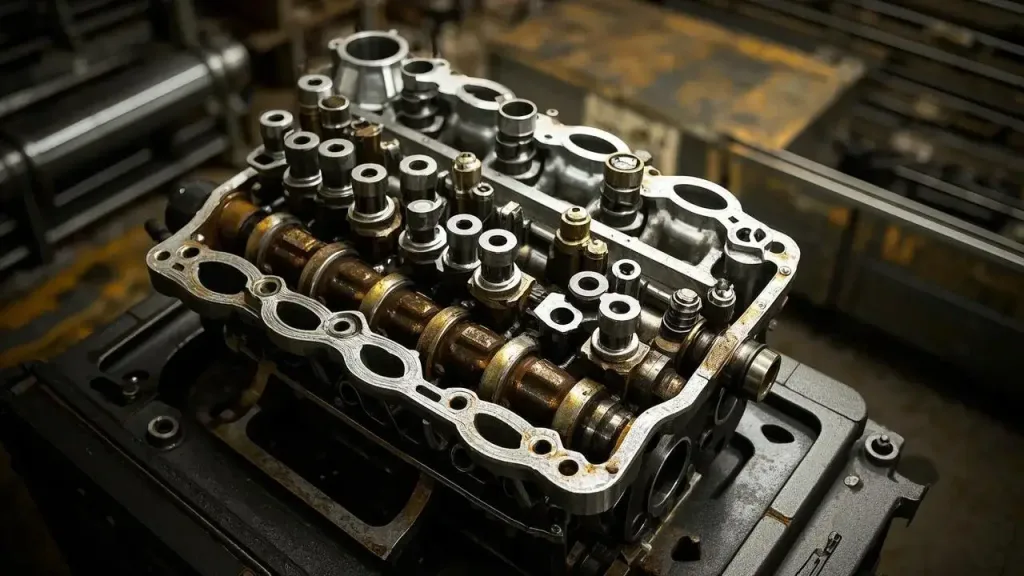
SOHC (Single Overhead Camshaft) engines use one camshaft per cylinder bank. This means:
- For an inline engine, there’s only one camshaft.
- For a V-engine (like a V6 or V8), there’s one camshaft per bank of cylinders.
In an SOHC design, the single camshaft controls both the intake and exhaust valves.
Pros of SOHC Engines:
- Simplicity: Fewer parts make it easier to maintain and repair.
- Lower Cost: They’re cheaper to manufacture, which can reduce the cost of the vehicle.
- Compact Size: SOHC engines are generally smaller and lighter, making them ideal for compact cars.
Cons of SOHC Engines:
- Limited Performance: They typically can’t rev as high as DOHC engines, limiting power output.
- Valve Timing Limitations: Since one camshaft operates both intake and exhaust valves, there’s less flexibility in timing optimization.
What Is a DOHC Engine?
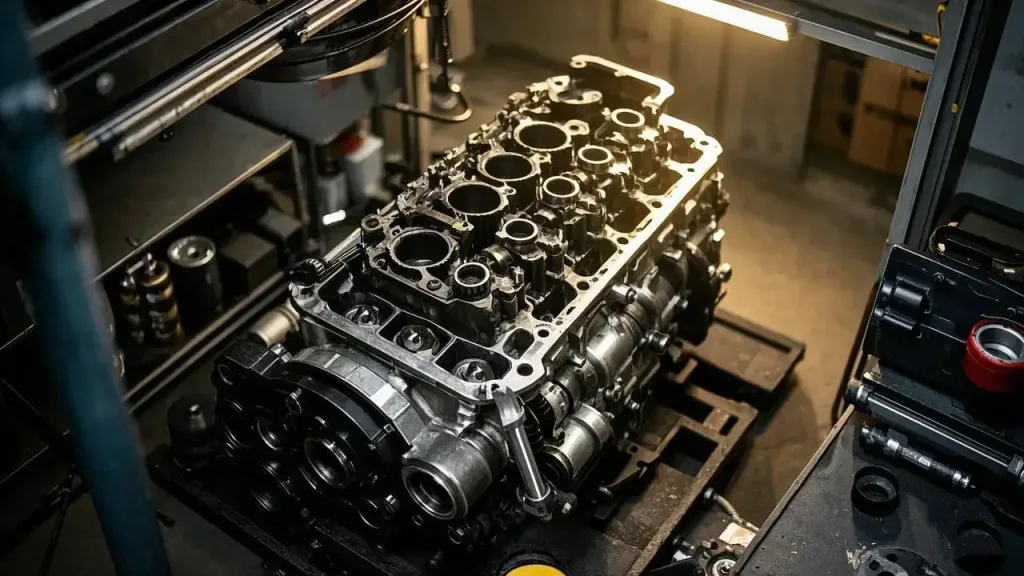
DOHC (Dual Overhead Camshaft) engines use two camshafts per cylinder bank—one for the intake valves and one for the exhaust valves.
Pros of DOHC Engines:
- More Power: With separate camshafts for intake and exhaust, DOHC engines can incorporate more valves (usually 4 per cylinder), allowing better airflow and higher RPMs.
- Improved Efficiency: Better valve control results in more precise timing, improving fuel efficiency and emissions.
- Versatility: DOHC designs can support advanced technologies like Variable Valve Timing (VVT).
Cons of DOHC Engines:
- Complexity: More parts mean higher manufacturing and repair costs.
- Size and Weight: DOHC engines are larger and heavier, which can affect a vehicle’s weight distribution.
SOHC vs. DOHC: Which Is Better?
The choice between SOHC and DOHC depends on what you value in an engine:
| Criteria | SOHC | DOHC |
| Performance | Adequate for daily driving. | Better for high-speed performance. |
| Fuel Efficiency | Slightly better at low speeds. | Improved at higher speeds. |
| Maintenance Costs | Lower due to simpler design. | Higher due to complexity. |
| Engine Size and Weight | Compact and lightweight. | Larger and heavier. |
For most daily drivers, SOHC engines are more practical, while DOHC engines cater to enthusiasts and performance-oriented drivers.
SOHC vs. DOHC Fuel Efficiency
When it comes to fuel efficiency, SOHC engines often have the edge in low-speed, city driving. Their simpler design and lighter weight reduce internal friction, making them ideal for stop-and-go traffic. With fewer moving parts, SOHC engines consume less energy to operate, which translates to better fuel economy in everyday driving conditions. This makes them a popular choice for compact cars and budget-friendly vehicles.
DOHC engines, on the other hand, shine at higher speeds and under heavy loads. Their ability to manage more valves per cylinder allows for improved air intake and exhaust flow, leading to more efficient combustion. While they may not be as fuel-efficient in urban environments, DOHC engines perform exceptionally well on highways, where they can optimize both power and efficiency. Advanced technologies like Variable Valve Timing (VVT) often enhance DOHC engines, further bridging the fuel economy gap.
VTEC DOHC
VTEC DOHC (Dual Overhead Camshaft) is Honda’s engineering marvel designed to deliver both power and efficiency. This system optimizes valve timing and lift based on engine speed. At lower RPMs, VTEC DOHC operates in a fuel-efficient mode by keeping the valves partially open to conserve fuel. Once the engine hits higher RPMs, the system activates a more aggressive cam profile, allowing the valves to open wider and longer, which maximizes airflow and boosts power. This seamless transition makes VTEC DOHC engines ideal for drivers who want efficiency during daily commutes but crave exhilarating performance when accelerating or cruising at high speeds.
What sets VTEC DOHC apart is its ability to support engines with four valves per cylinder, enabling superior air intake and exhaust flow. This results in higher horsepower and a broader powerband compared to non-VTEC systems or SOHC engines. VTEC DOHC is commonly found in Honda’s performance-oriented models, such as the Civic Type R and Integra, making it a favorite among car enthusiasts who want the best of both worlds—thrilling performance and dependable fuel efficiency.
VTEC SOHC
VTEC SOHC (Single Overhead Camshaft) is Honda’s innovative solution for blending efficiency and performance in a simpler engine design. Unlike its DOHC counterpart, VTEC SOHC uses a single camshaft to control both intake and exhaust valves. At low engine speeds, the system focuses on conserving fuel by limiting valve lift and timing, making it ideal for city driving and maximizing mileage. As the RPMs increase, VTEC activates a more aggressive cam profile for improved airflow, delivering a noticeable boost in power when you need it most.
While it doesn’t offer the same high-performance potential as VTEC DOHC, VTEC SOHC is well-suited for everyday vehicles, offering a balanced mix of practicality and fun. It’s commonly found in models like the Honda Civic EX and Accord, where drivers appreciate its simplicity, reliability, and ability to provide decent power without sacrificing fuel efficiency. This makes VTEC SOHC an excellent choice for those who want an economical engine that doesn’t skimp on spirited performance.
Conclusion
SOHC and DOHC engines each have their strengths and weaknesses. SOHC engines are simple, reliable, and affordable, while DOHC engines deliver superior power, efficiency, and advanced features. Your choice depends on your driving needs: do you prioritize cost and simplicity, or are you after power and cutting-edge technology?
Frequently Asked Questions
What is the main difference between SOHC and DOHC engines?
SOHC engines have a single camshaft per cylinder bank, while DOHC engines have two camshafts per cylinder bank—one for intake valves and one for exhaust valves. This difference affects performance, efficiency, and complexity.
Are DOHC engines always better than SOHC engines?
Not always. DOHC engines are more powerful and versatile, but SOHC engines are simpler, lighter, and more cost-effective. The choice depends on your priorities, like performance vs. maintenance costs.
Which engine type is more fuel-efficient: SOHC or DOHC?
SOHC engines are generally more fuel-efficient at low speeds and in stop-and-go traffic, while DOHC engines perform better at higher speeds and offer better fuel combustion.
Is maintenance more expensive for DOHC engines?
Yes, DOHC engines typically have higher maintenance costs due to their complex design, additional parts, and higher labor costs during repairs.
Can I upgrade my car from SOHC to DOHC?
Technically, yes, but the process is complicated and costly, requiring significant modifications to the engine and other components. It’s usually more practical to buy a vehicle with a DOHC engine.
Are SOHC engines outdated?
Not at all. SOHC engines are still widely used in compact cars, motorcycles, and some trucks due to their simplicity, reliability, and cost-effectiveness
Do DOHC engines last longer than SOHC engines?
Both can last a long time if properly maintained. However, the simpler design of SOHC engines may lead to fewer mechanical issues over time.
What kind of vehicles typically use SOHC engines?
SOHC engines are commonly found in smaller, budget-friendly cars, motorcycles, and trucks that prioritize simplicity and fuel economy over high performance.
Why do sports cars often use DOHC engines?
Sports cars use DOHC engines because they provide superior airflow, better valve control, and the ability to operate at higher RPMs, which translates to increased horsepower and performance.
Is VTEC only available in DOHC engines?
No, Honda’s VTEC system is available in both SOHC and DOHC engines. While DOHC VTEC focuses on maximizing power, SOHC VTEC balances efficiency and performance.



Add comment