

What Causes an Oil Pan Leak
Ever found a mysterious puddle of oil under your car? Chances are, your oil pan gasket is the culprit. But what is an oil pan gasket, and why is it so important? The oil pan gasket seals the oil pan to the engine block, preventing oil from leaking. Without it, your engine could lose lubrication, leading to catastrophic damage. Let’s dive into what causes these pesky leaks and how to address them.
What Causes an Oil Pan to Leak?
An oil pan leak can feel like one of those annoying car problems that sneaks up on you. At first, it’s just a few drops of oil on your driveway, but over time, it can turn into a much bigger issue if left unchecked. So, what exactly causes an oil pan to leak? Let’s break it down.
1. Worn-Out Gasket
The gasket is the unsung hero of the oil pan. Its job is to create a tight seal between the oil pan and the engine block, preventing oil from escaping. However, over time, the gasket material—often made of rubber or cork—can degrade.
- Heat Cycles: Engines run hot, and repeated exposure to heat and cooling can cause the gasket to crack or shrink.
- Age: Like all rubber components, gaskets naturally deteriorate with age, even if the car isn’t driven frequently.
- Oil Contamination: Leaks from other parts of the engine or exposure to contaminants can break down the gasket material faster.
2. Improper Installation
Sometimes, the problem isn’t wear and tear but how the oil pan gasket was installed in the first place. A few common installation errors include:
- Over-Tightening Bolts: This can crush the gasket, causing it to deform and lose its sealing properties.
- Uneven Bolting: If the bolts aren’t tightened evenly, the oil pan may not sit flush against the engine block, creating small gaps for oil to seep through.
- Using the Wrong Gasket: Not all gaskets are created equal. If the wrong size or material is used, it can fail to seal properly.
3. Damage to the Oil Pan
Your oil pan sits at the very bottom of your engine, making it vulnerable to damage from the road. Here are a few scenarios that can lead to a leaking oil pan:
- Road Debris: Rocks, branches, or even chunks of metal can strike the oil pan while driving, denting it or even puncturing it.
- Potholes and Speed Bumps: Hitting a deep pothole or scraping over a tall speed bump can crack the oil pan or knock it out of alignment.
- Corrosion: In older vehicles, rust can eat away at the oil pan, especially if you live in a region with salty winter roads.
4. Excessive Engine Heat
Engines are designed to handle heat, but there are limits. Prolonged exposure to high temperatures can warp the oil pan or cause the gasket to break down prematurely.
- Overheating Engine: If your engine runs hotter than normal due to poor cooling, it can damage nearby components, including the oil pan.
- High-Performance Engines: Turbocharged or high-performance engines that generate more heat may cause oil pan gaskets to fail more quickly.
5. Poor Maintenance
Regular maintenance goes a long way in preventing oil pan leaks. Neglecting oil changes or using the wrong oil type can lead to sludge buildup, which puts additional strain on seals and gaskets. Over time, this extra stress can lead to leaks.
6. Manufacturing Defects
In rare cases, an oil pan leak may be the result of a defect in the oil pan or gasket itself. Poor casting of the pan or subpar materials used in the gasket can lead to premature failure.
Oil Pan Gasket Leak Symptoms
Spotting the signs early can save you from costly repairs. Here’s what to watch out for:
- Oil Spots Under the Car: Notice a puddle or small spots of oil on your driveway? That’s a telltale sign of a leak.
- Burning Oil Smell: Leaking oil can drip onto hot engine parts, creating a distinct burning odor.
- Low Oil Levels: If you find yourself frequently topping off your oil, a leak might be the reason.
- Check Engine Light: Modern vehicles may trigger a warning light if oil pressure drops due to a leak.
Why Do Oil Pan Leaks (and Leaks in General) Happen?
Oil leaks can occur in various parts of your engine, but the underlying causes are often similar:
- Aging Components: Rubber seals, gaskets, and hoses become brittle over time, leading to leaks.
- Poor Maintenance: Irregular oil changes or using the wrong oil type can contribute to excessive wear.
- Overheating: High engine temperatures can warp metal parts, breaking seals and causing leaks.
- Road Hazards: Physical impacts from road debris or curbs can damage vulnerable components like the oil pan.
Can I Drive With a Cracked Oil Pan?
Technically, you can, but it’s a risky move. Driving with an oil pan leak or crack can lead to:
- Engine Damage: Low oil levels reduce lubrication, causing friction and wear inside the engine.
- Overheating: Without proper lubrication, the engine could overheat, leading to severe damage.
- Safety Hazards: Leaking oil on the road can create slippery conditions for other drivers.
If you suspect an oil pan issue, it’s best to address it immediately.
How to Fix an Oil Pan Leak
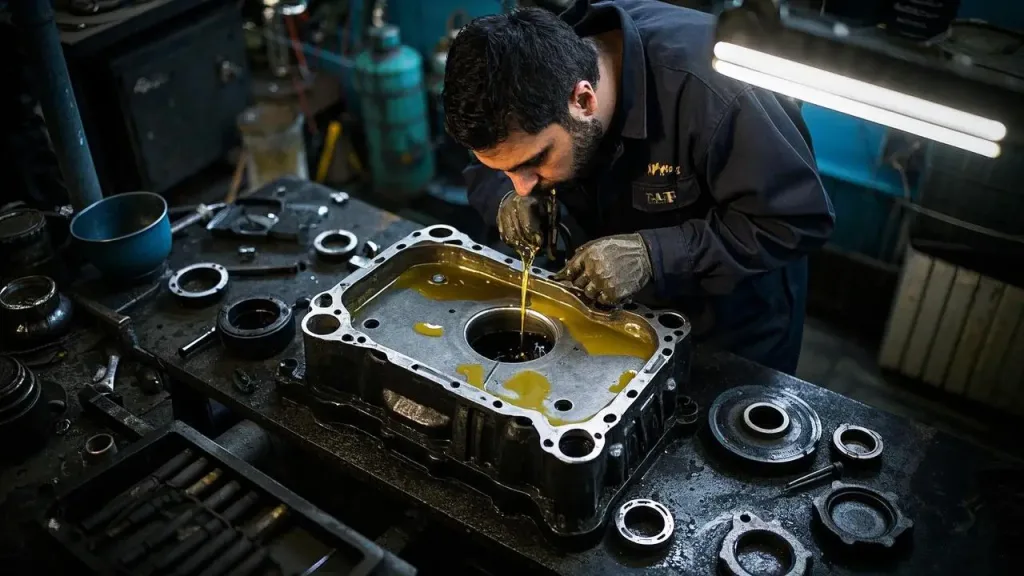
An oil pan leak can be frustrating, but the good news is that it’s fixable with the right approach. Whether you’re a seasoned DIYer or someone looking to understand the repair process before taking it to a mechanic, this guide will walk you through the steps to fix an oil pan leak.
Step 1: Confirm the Leak Source
Before diving into the repair, make sure the oil pan is actually the source of the leak. Oil leaks can originate from multiple places, such as the valve cover gasket, oil filter, or rear main seal. Clean the engine thoroughly and look for fresh oil to identify the exact location of the leak.
- Tip: Use UV dye and a blacklight to pinpoint the source of the leak more easily.
Step 2: Prepare for the Repair
Once you’ve confirmed the oil pan is leaking, gather the necessary tools and materials. Here’s what you’ll typically need:
- Replacement oil pan gasket (or a new oil pan, if damaged)
- Socket set and ratchet
- Torque wrench
- Gasket scraper or plastic putty knife
- Brake cleaner or degreaser
- Sealant (if recommended by the manufacturer)
- Drain pan
- New engine oil
- Oil filter (optional, but it’s a good time to replace it)
Step 3: Drain the Oil
Before removing the oil pan, you’ll need to drain the engine oil to avoid messy spills.
- Locate the Drain Plug: Position a drain pan underneath and remove the oil drain plug with a socket wrench. Let the oil completely drain out.
- Remove the Oil Filter (Optional): Since you’ll be refilling the oil later, it’s often a good idea to replace the oil filter while you’re at it.
Step 4: Remove the Oil Pan
With the oil drained, it’s time to remove the oil pan.
- Unbolt the Oil Pan: Use your socket set to remove the bolts securing the oil pan to the engine. Keep track of the bolts—they may vary in length.
- Gently Pry the Pan Loose: If the oil pan doesn’t come off easily, use a gasket scraper or plastic putty knife to carefully break the seal. Avoid using metal tools that could damage the mating surface.
Step 5: Inspect and Clean
Once the oil pan is off, inspect it for damage. If the pan is cracked or heavily corroded, you’ll need to replace it. If it’s in good condition, you can proceed with cleaning.
- Clean the Mating Surfaces: Remove any remnants of the old gasket from both the oil pan and the engine block. Use a gasket scraper or a plastic putty knife to avoid scratching the surfaces.
- Degrease the Area: Spray brake cleaner or degreaser on the surfaces and wipe them clean to ensure a proper seal.
Step 6: Install the New Gasket
With the surfaces clean, you can install the new gasket.
- Apply Sealant (If Required): Some gaskets require a thin layer of sealant on one or both sides. Check the manufacturer’s instructions for your specific vehicle.
- Position the Gasket: Place the gasket on the oil pan, ensuring it lines up with the bolt holes.
Step 7: Reinstall the Oil Pan
Now it’s time to put everything back together.
- Position the Oil Pan: Carefully align the oil pan with the engine block and ensure the gasket stays in place.
- Tighten the Bolts: Hand-tighten the bolts first, then use a torque wrench to tighten them to the manufacturer’s specifications. Tighten in a crisscross pattern to ensure an even seal.
Step 8: Refill the Engine Oil
With the oil pan securely in place, you can refill the engine with fresh oil.
- Replace the Drain Plug: Reinstall the oil drain plug and tighten it securely.
- Add Oil: Pour in the correct amount and type of oil specified for your vehicle. Check the dipstick to ensure proper levels.
Step 9: Check for Leaks
After completing the repair, start the engine and let it run for a few minutes. Check underneath the car for any signs of a new leak.
- Tip: Drive the car for a short distance and inspect again to ensure the repair was successful.
When to Seek Professional Help
While fixing an oil pan leak can be a DIY job, there are situations where professional help may be needed:
- If the Oil Pan is Hard to Access: In some vehicles, removing the oil pan requires lifting the engine or dropping the subframe, which can be complicated.
- If the Leak Persists: Persistent leaks may indicate issues with other engine seals or improper installation of the gasket.
Where to Get a New Oil Pan for Your Vehicle
Driving with a cracked or leaking oil pan is never a good idea. It can lead to costly engine damage if left unaddressed. Instead of risking more extensive repairs, tackle the problem early by replacing the oil pan as soon as possible. You can find and order a high-quality oil pan quickly and easily at Wanasign.
At Wanasign, we offer a wide selection of oil pans sourced from the most reliable manufacturers in the industry. Each oil pan is designed to meet or exceed OEM standards, ensuring durability and a perfect fit for your vehicle. Not only do you get exceptional quality at a great price, but you can also receive your oil pan in as fast as three business days. With strategically located warehouses across the U.S., we ensure fast and efficient delivery to get you back on the road in no time.
Why wait until your oil pan causes serious problems? Take action now and shop at Wanasign for the best deals and the highest quality oil pans for your vehicle. Your car—and your wallet—will thank you!
Final Thoughts
An oil pan leak might seem like a small issue, but ignoring it can lead to significant engine damage. By understanding the causes, spotting the symptoms early, and taking swift action, you can keep your vehicle running smoothly. Whether you’re a DIY enthusiast or prefer leaving it to the pros, addressing oil pan leaks promptly will save you time, money, and headaches down the road.



Add comment