

Is a Cylinder Block a Moving Part in a Car?
In the world of car engines, the cylinder block stands as a foundational element, often referred to as the engine block. But one common question arises: is the cylinder block a moving part? The short answer is no, but its role is far from static. The cylinder block plays a critical role in the engine’s operation, providing the structure and housing for several moving parts. This post will delve into what a cylinder block is, its types, functions, and components, offering a comprehensive understanding of this vital engine component.
Understanding the Cylinder Block
The cylinder block is the backbone of an internal combustion engine. It’s the structure that houses the cylinders, where the engine’s power is generated through the combustion of fuel and air. The block also provides support and alignment for the crankshaft, camshaft, and other critical engine parts. Without the cylinder block, there would be no engine to speak of, as it holds everything together.
Is the Cylinder Block a Moving Part?
Despite its central role, the cylinder block itself is not a moving part. It is a solid, stationary structure made from cast iron or aluminum, designed to withstand the stresses and strains of engine operation. While it doesn’t move, the cylinder block is home to many of the engine’s moving parts, such as the pistons, crankshaft, and connecting rods, which are responsible for the engine’s motion and power output.
Types of Cylinder Blocks
Cylinder blocks come in different shapes and configurations, each designed to meet specific performance and packaging requirements in various types of vehicles.
Inline Cylinder Blocks
The inline configuration, where the cylinders are arranged in a single straight line, is common in many four-cylinder engines. It’s a simple and compact design, offering good balance and ease of manufacturing, making it popular in smaller cars and some larger vehicles.
V-Type Cylinder Blocks
V-type cylinder blocks arrange the cylinders in two angled rows, forming a “V” shape. This configuration is typical in V6, V8, and larger engines. The V-type design allows for more cylinders to be packed into a smaller space, providing higher power output and smoother operation compared to inline engines.
Flat or Boxer Cylinder Blocks
Flat or boxer engines have cylinders arranged in two horizontal banks, opposite each other. This design offers a low center of gravity and excellent balance, which is why it’s favored in performance cars and some aircraft engines. The Subaru and Porsche brands are well-known for using boxer engines.
Differences and Applications of Each Type
Each cylinder block type has its advantages and is used based on the specific needs of the vehicle. Inline engines are typically more efficient and easier to maintain, while V-type engines provide more power and are more compact. Boxer engines offer balance and stability, making them ideal for high-performance vehicles.
Functions of the Cylinder Block
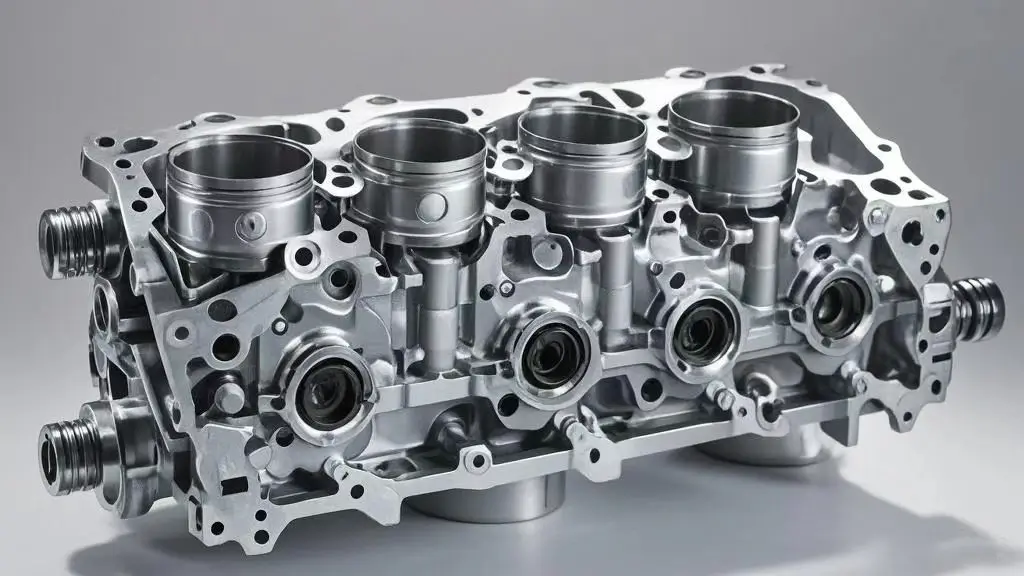
The cylinder block performs several critical functions that are essential for the engine’s operation.
Housing for the Engine’s Cylinders
The primary function of the cylinder block is to house the engine’s cylinders. These cylinders are where the combustion process takes place, converting the fuel-air mixture into power. The precise machining of these cylinders is crucial for the engine’s efficiency and performance.
Support for Other Engine Components
The cylinder block provides the structural support for other key engine components, including the crankshaft, camshaft, and connecting rods. These components rely on the block’s stability and alignment to function correctly, ensuring that the engine runs smoothly.
Passageways for Coolant and Oil
To keep the engine from overheating and to lubricate the moving parts, the cylinder block includes internal passageways for coolant and oil. These passageways allow the coolant to circulate and absorb heat from the engine, while the oil lubricates the pistons and other moving parts, reducing friction and wear.
Components of a Cylinder Block
The cylinder block is more than just a large chunk of metal. It contains several essential components that contribute to the engine’s operation.
Cylinders
The cylinders are the heart of the engine, where the pistons move up and down to create power. The number of cylinders in a block can vary, with common configurations including four, six, or eight cylinders.
Water Jackets
Water jackets are hollow sections within the cylinder block that allow coolant to flow around the cylinders. This cooling system helps to prevent the engine from overheating during operation.
Oil Galleries
Oil galleries are passages within the cylinder block that transport oil to various parts of the engine, ensuring that all moving components are adequately lubricated.
Mounting Points for Other Engine Parts
The cylinder block also includes mounting points for attaching other engine parts, such as the cylinder head, crankshaft, and sometimes the engine mounts. These mounting points must be precisely aligned to ensure that all engine components work together seamlessly.
Conclusion
The cylinder block is indeed a non-moving part, but its role in the engine is anything but passive. It serves as the foundation of the engine, housing the cylinders where power is generated and supporting all the other critical components. Understanding the cylinder block’s functions, types, and components helps to appreciate the complexity and engineering that goes into making an engine run smoothly. While the block itself doesn’t move, it is central to the movement and power generated by the engine, making it an indispensable part of any vehicle.
FAQs
What materials are cylinder blocks made from?
Cylinder blocks are typically made from cast iron or aluminum. Cast iron is known for its durability and strength, while aluminum is lighter and has better heat dissipation properties.
How does the design of a cylinder block affect engine performance?
The design of a cylinder block, including its material, shape, and configuration, can significantly impact engine performance, influencing factors such as power output, engine efficiency, and the vehicle’s overall weight.
Can a cylinder block be repaired?
Yes, a cylinder block can often be repaired if it suffers from minor damage like cracks or warping. However, severe damage may require the block to be replaced entirely.
What happens if a cylinder block is damaged?
If a cylinder block is damaged, it can lead to various engine problems, including loss of compression, coolant leaks, and even catastrophic engine failure. Immediate repair or replacement is essential to avoid further damage.
Is the cylinder block the same as the engine block?
Yes, the terms “cylinder block” and “engine block” are often used interchangeably. Both refer to the main structure of the engine that houses the cylinders and supports other engine components.



Add comment