

Drive Belt vs. Timing Belt: What Are the Differences?
Modern vehicles are marvels of engineering, with every component working in harmony to ensure smooth and efficient operation. Among these components, belts play a crucial role in engine functionality. Two primary belts found in most vehicles are the drive belt and the timing belt. While they may seem similar, they serve entirely different purposes. Understanding the differences is vital for proper vehicle maintenance and avoiding costly repairs. This article dives deep into the distinctions, functions, and maintenance of these two essential components.
What is a Drive Belt?
A drive belt, also known as a serpentine belt or accessory belt, is a long, durable belt located on the exterior of the engine. It is designed to drive various engine accessories by transferring mechanical power from the engine’s crankshaft.
Functions of a Drive Belt
The drive belt powers several vital systems, including:
- Alternator: Charges the battery and powers the electrical systems while the engine is running.
- Power Steering Pump: Assists in steering effort by providing hydraulic or electric assistance.
- Air Conditioning Compressor: Powers the air conditioning system, ensuring a comfortable cabin temperature.
- Water Pump (in some vehicles): Circulates coolant through the engine to maintain optimal temperature.
Design and Materials
Drive belts are made from durable rubber compounds reinforced with synthetic materials like nylon or polyester. They have grooves on one side to improve traction and ensure smooth operation with the pulleys.
Lifespan and Maintenance
The average lifespan of a drive belt ranges from 50,000 to 100,000 miles, depending on driving conditions and vehicle specifications. Regular inspection is crucial to spot wear and tear, such as cracks, fraying, or glazing.
Consequences of Drive Belt Failure
If a drive belt fails, systems like the alternator, power steering, and air conditioning will stop functioning. While it won’t directly damage the engine, losing these systems can leave you stranded or compromise safety.
What is a Timing Belt?
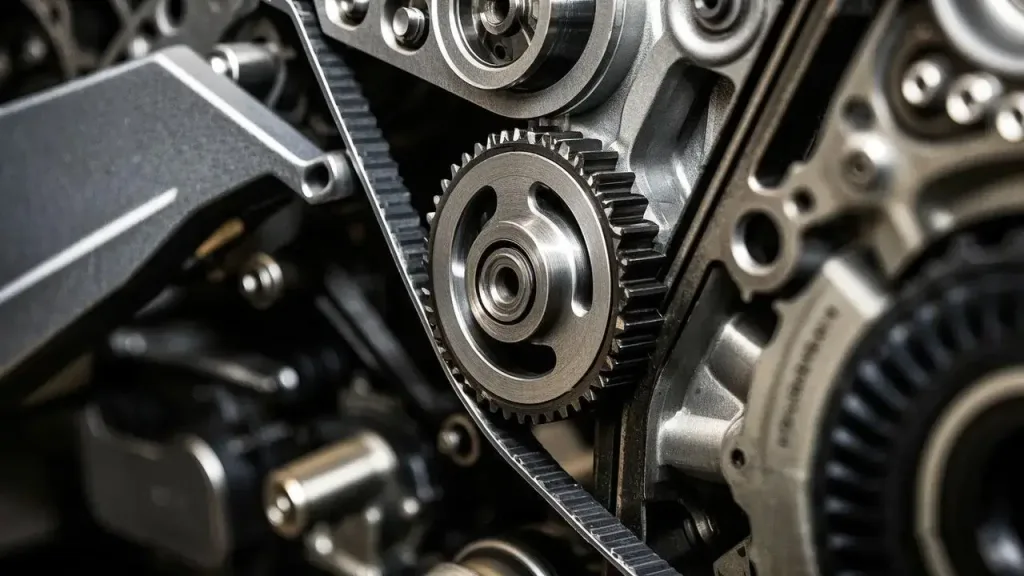
The timing belt is a toothed belt located inside the engine, usually under a protective cover. Its primary job is to ensure the engine’s crankshaft and camshaft stay synchronized, allowing the engine’s valves to open and close at precisely the right time during the combustion cycle.
Functions of a Timing Belt
- Maintains synchronization between the engine’s pistons and valves.
- Ensures proper engine timing for optimal performance and fuel efficiency.
- Prevents interference between pistons and valves in interference engines.
Design and Materials
Timing belts are made of reinforced rubber or polymer materials, with teeth along their inner surface to prevent slippage. The teeth mesh with the camshaft and crankshaft gears, maintaining precise timing.
Lifespan and Maintenance
Timing belts typically need replacement every 60,000 to 100,000 miles, as specified by the vehicle manufacturer. Neglecting maintenance can result in severe engine damage.
Consequences of Timing Belt Failure
If the timing belt fails, the engine’s synchronization is lost. In interference engines, this can cause the pistons to collide with the valves, leading to bent valves, damaged pistons, and even complete engine failure.
Difference Between Drive Belt and Timing Belt
The drive belt and timing belt are two critical components in a vehicle’s engine, but they perform entirely different functions. Knowing the differences between the two can help vehicle owners better understand their maintenance needs and avoid unnecessary damage. Below is a detailed comparison of the drive belt and timing belt.
| Aspect | Drive Belt | Timing Belt |
| Function | Powers accessories like alternator, A/C, and more. | Synchronizes crankshaft and camshaft. |
| Location | Outside the engine, visible in the engine bay. | Inside the engine, under a protective cover. |
| Design | Smooth with grooves, durable rubber construction. | Toothed, made of reinforced rubber or polymer. |
| Lifespan | 50,000 to 100,000 miles. | 60,000 to 100,000 miles. |
| Failure Impact | Loss of accessory functions but no engine damage. | Severe engine damage in interference engines. |
Signs of Belt Issues
Both the drive belt and the timing belt are essential for the smooth operation of your vehicle. Over time, these belts can wear out, stretch, or fail, leading to noticeable symptoms. Recognizing the warning signs early can help you address problems before they escalate into costly repairs or complete breakdowns. Below are the common signs of issues with each belt:
Signs of Drive Belt Issues
The drive belt powers various engine accessories, so problems with this belt can lead to noticeable symptoms related to accessory systems.
1. Squealing or Chirping Noise
- A loud squealing or chirping sound, especially during engine startup or acceleration, is a common indicator of a loose or worn drive belt.
- This noise is caused by the belt slipping on the pulleys.
2. Visible Cracks or Fraying
- Inspect the belt visually. If you notice cracks, fraying, or signs of wear on the surface, it’s a clear indication that the belt is nearing the end of its lifespan.
3. Loss of Accessory Function
- A failing drive belt can cause accessory systems, such as the alternator, power steering, or air conditioning, to stop working properly. Symptoms may include:
- Dim headlights or a drained battery (alternator issue).
- Difficulty steering (power steering issue).
- Warm air blowing from the A/C vents (air conditioning issue).
4. Glazing or Shiny Surface
- A glazed or shiny surface on the belt indicates that it has been slipping. This reduces its ability to grip the pulleys effectively.
5. Belt Looseness or Misalignment
- A loose or misaligned belt may cause irregular operation of the pulleys and result in reduced efficiency of the accessory systems.
Signs of Timing Belt Issues
The timing belt controls the synchronization of the engine’s internal components, so any issues can severely impact engine performance.
1. Ticking Noise from the Engine
- A ticking or clicking sound coming from the engine is often an early warning sign of a worn or loose timing belt.
2. Engine Misfires or Rough Idling
- If the timing belt slips, it can throw off the engine’s timing, causing misfires, rough idling, or poor acceleration.
3. Difficulty Starting the Engine
- A damaged timing belt may affect the engine’s ability to start properly, resulting in delayed or failed ignition.
4. Oil Leaks from the Timing Cover
- A failing timing belt can sometimes cause oil leaks from the area around the timing belt cover. This can also lead to contamination of the belt itself, accelerating its wear.
5. Engine Warning Light
- In some vehicles, the check engine light may illuminate if the timing belt begins to fail or if there’s a timing-related issue.
6. Complete Engine Failure
- If the timing belt snaps, the engine will stop running entirely. In interference engines, this can lead to catastrophic damage, such as bent valves or damaged pistons.
Conclusion
The drive belt and timing belt are integral to your vehicle’s operation, but they serve different purposes. While the drive belt powers external accessories, the timing belt ensures the engine’s internal components remain synchronized. Regular inspection and timely replacement of both belts are critical to avoid inconvenience and costly repairs.
Drive Belt vs Timing Belt: FAQs
Q: Can a vehicle have both a drive belt and a timing belt?
A: Yes, most vehicles have both. The drive belt operates accessories, while the timing belt controls engine timing.
Q: How do I know when to replace these belts?
A: Consult your vehicle’s owner manual for recommended replacement intervals. Regular inspections during routine maintenance can also help identify issues early.
Q: What happens if I ignore belt maintenance?
A: Ignoring a worn timing belt can lead to catastrophic engine damage, while a failed drive belt can cause accessory systems to stop functioning.
Q: Are timing chains the same as timing belts?
A: No, timing chains are made of metal and are generally more durable but require proper lubrication and maintenance.



Add comment