

What Is a Top-End Engine Rebuild?
If your vehicle is losing power, burning oil, or making ticking noises from the engine bay, you might be dealing with issues in the top end of your engine. These symptoms can signal the need for a top-end engine rebuild—a focused repair process that restores critical components without tearing apart the entire engine.
Understanding what a top-end rebuild involves can help you decide whether it’s time for repairs, what to expect in terms of cost and labor, and whether you can tackle the job yourself or need professional help. Whether you’re a DIY mechanic or simply want to make an informed decision, this guide will break down:
- What exactly is a top-end engine rebuild
- Which components are replaced or remanufactured
- Common symptoms that indicate you may need one
- The difference between a top-end and a full engine rebuild
- Tips for success if you decide to take on the job
Let’s start by understanding what “top-end” and “bottom-end” mean in engine terms.
Defining an Engine’s Top and Bottom End
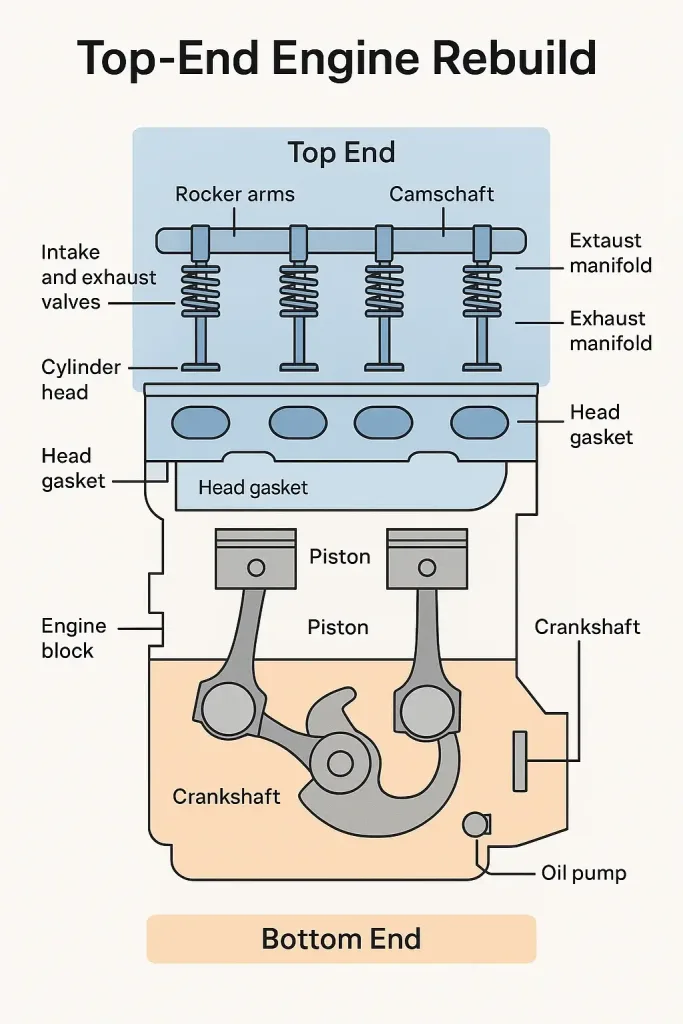
An internal combustion engine is generally divided into two major sections: the top end and the bottom end. Each section plays a different role and contains distinct components that contribute to engine performance.
Top End of the Engine
The top end includes the parts above the engine block, responsible for managing air, fuel, and exhaust flow. These components include:
- Cylinder head(s)
- Intake and exhaust valves
- Camshaft(s)
- Rocker arms, lifters, and pushrods (in OHV engines)
- Head gasket
- Intake and exhaust manifolds
The top end handles the air-fuel intake, combustion sealing, and exhaust release. Problems here can cause rough idling, misfires, smoke, or loss of power.
Bottom End of the Engine
The bottom end includes components that create the engine’s rotational force and manage oil flow. It includes:
- Pistons and rings
- Connecting rods
- Crankshaft
- Bearings
- Oil pump
- Engine block
Issues in the bottom end often result in knocking, metal-on-metal wear, or complete engine failure.
Why It Matters
A top-end rebuild targets only the upper part of the engine, often enough to fix performance problems without a full engine overhaul. Knowing the difference helps diagnose problems correctly and choose the right repair path.
What Is a Top-End Engine Rebuild?
A top-end engine rebuild refers to the process of removing, inspecting, repairing, or replacing the components in the upper half of an engine, mainly the cylinder head and its associated parts.
This type of rebuild is usually done when the bottom end (pistons, crankshaft, etc.) is still in good condition, but the top end is worn or damaged. It’s common after high mileage or when symptoms point to valve, head gasket, or combustion sealing issues.
Primary Goals of a Top-End Rebuild:
- Restore engine compression and efficiency
- Repair damage from overheating or head gasket failure
- Eliminate oil burning and exhaust smoke
- Improve overall engine performance
What’s Replaced or Remanufactured in a Top-End Rebuild?
The components and processes involved in a top-end rebuild will vary slightly depending on the engine, but typically include:
Disassembly and Inspection
- Removal of cylinder head(s)
- Checking for cracks, warping, or gasket failure
- Pressure testing the head for leaks
Cylinder Head Machining
- Resurfacing to ensure a flat sealing surface
- Cleaning carbon deposits and oil sludge
- Valve seat cutting or grinding
Valve Train Work
- Replacing or grinding valves
- Installing new valve stem seals
- Replacing valve guides (if worn)
- Testing valve spring pressure
- Cleaning or replacing lifters, pushrods, and rocker arms (as needed)
New Gaskets and Seals
- Head gasket
- Valve cover gasket
- Intake and exhaust manifold gaskets
- Camshaft seals (if applicable)
Timing Components (Optional but Recommended)
- Timing belt or chain
- Tensioners and guides
When Is a Top-End Engine Rebuild Necessary?
Not every engine issue calls for a full rebuild. A top-end rebuild may be the right solution if you notice:
Common Symptoms
- Excessive blue or white smoke from the exhaust
- Poor compression or misfiring cylinders
- Engine overheating or coolant loss (head gasket failure)
- Ticking or tapping noises from the top of the engine
- Loss of power or poor acceleration
- Oil fouling on spark plugs
- Excessive oil consumption
Diagnostic Tests to Confirm
- Compression test
- Leak-down test
- Visual inspection of coolant and oil mixing
- Cylinder head pressure testing
If the bottom end is still in good shape, a top-end rebuild can give your engine new life at a fraction of the cost of a full rebuild.
Top-End vs. Full Engine Rebuild: Key Differences
| Feature | Top-End Rebuild | Full Engine Rebuild |
|---|---|---|
| Focus | Cylinder head, valves, top components | Complete engine teardown |
| Cost | Lower | Higher |
| Time | Faster (1–3 days) | Longer (several days to weeks) |
| Common Triggers | Valve wear, head gasket failure, overheating | Severe wear, knocking, oil pressure loss |
| Bottom End Work | Not included | Included (pistons, crankshaft, bearings) |
Use a top-end rebuild when only the upper half of the engine is worn.
Go for a full rebuild if the lower end is damaged or if the engine has very high mileage.
Cost of a Top-End Engine Rebuild
The cost of a top-end rebuild depends on several factors, including engine type, labor rates, and whether you DIY or go to a shop.
Average Costs:
- DIY: $300–$800 (gaskets, seals, valve job, machine work)
- Professional Shop: $1,000–$2,500+ (labor + parts + machining)
Cost Breakdown:
| Item | Cost Estimate |
|---|---|
| Head gasket set | $100–$250 |
| Valve seals and guides | $50–$150 |
| Valve job/machining | $100–$400 |
| Timing components (optional) | $100–$400 |
| Labor (shop) | $500–$1,500 |
Tips to Save:
Do disassembly and reassembly if you’re mechanically inclined
Buy a complete top-end rebuild kit
Clean and prep parts yourself
Use a local machine shop for head resurfacing
Pros and Cons of a Top-End Rebuild
Pros:
- Restores engine performance and fuel efficiency
- Much more affordable than a full rebuild
- Fixes valve-related issues, smoke, and poor compression
- Extends engine lifespan without major teardown
Cons:
- Doesn’t address bottom-end wear (pistons, crankshaft)
- If the bottom end fails later, you may need another rebuild
- Labor-intensive if done incorrectly
- Head resurfacing or machining adds time and cost
Can You DIY a Top-End Engine Rebuild?
Yes—if you have experience, time, and the right tools. A top-end rebuild is less complex than a full engine rebuild but still requires precision and care.
Tools You’ll Need
- Torque wrench
- Valve spring compressor
- Feeler gauges
- Engine hoist or support bar (in some cases)
- Service manual for your specific engine
Challenges to Expect
- Diagnosing the root cause accurately
- Ensuring clean, debris-free assembly
- Torque specs and bolt tightening sequences
- Proper sealing of gaskets and components
If you’re unsure, consult a professional—especially if machine work is needed.
Tips for a Successful Top-End Rebuild
- Diagnose Before You Disassemble: Know exactly why you’re rebuilding.
- Replace All Gaskets and Seals: Don’t reuse old ones.
- Check Head Flatness: Always have it resurfaced if warped.
- Replace Timing Components If Worn: Especially belts and chains.
- Stay Organized: Label bolts and keep parts in order.
- Follow the Torque Specs: Use a torque wrench and follow the proper sequence.
- Keep It Clean: One speck of dirt can ruin your work.
Conclusion
A top-end engine rebuild can be the perfect solution when your engine is showing signs of upper-half wear, but the bottom end is still healthy. It’s a cost-effective way to restore compression, stop oil burning, and extend the life of your vehicle.
By understanding the difference between the top and bottom end, knowing what’s involved in a rebuild, and watching for warning signs, you can make smart, informed decisions—whether you’re turning wrenches in your own garage or working with a professional shop.
FAQ
Q: Will a top-end rebuild fix low compression?
Yes, if the low compression is due to worn valves, valve seals, or a blown head gasket. If piston rings or cylinder walls are the issue, a full rebuild is required.
Q: How long does a top-end rebuild take?
DIY: 1–3 days depending on experience. Shop: Usually 1–2 days if no delays.
Q: Can a top-end rebuild improve performance?
Absolutely. Restoring valve sealing and proper combustion can bring back lost horsepower and fuel efficiency.
Q: Is it worth rebuilding just the top end?
Yes, if the bottom end is in good shape. It’s a common and cost-effective solution for engines with top-end-specific issues.



Add comment