

Top 8 Warning Signs of a Failing Idler Pulley
Your vehicle’s engine is a finely tuned machine, and every component plays a role in keeping it running smoothly. One of these often-overlooked parts is the idler pulley. While it might not be the star of the show like the engine or transmission, a failing idler pulley can cause serious headaches if left unchecked. It’s not just about saving money—it’s about keeping your vehicle safe and operational.
In this article, we’ll dive into the top warning signs of a failing idler pulley, helping you spot problems early and take action before they snowball into more expensive repairs.
What Is an Idler Pulley?
The idler pulley is a small, yet essential, component in your vehicle’s belt system. It guides and maintains tension in the engine’s drive belt, ensuring smooth operation of critical components like the alternator, power steering pump, and air conditioning compressor. Without it, your engine’s performance can suffer, and so can your driving experience.
Think of the idler pulley as the silent workhorse of your car’s belt system. It doesn’t drive anything directly, but it ensures everything else stays in sync.
How Does an Idler Pulley Work?
The idler pulley works by redirecting the drive belt in the engine’s serpentine system. This redirection maintains proper tension and alignment, ensuring the belt doesn’t slip or wear out prematurely. It spins on a bearing, reducing friction and allowing the belt to move freely.
When the pulley operates correctly, you likely won’t even notice it. However, as it begins to fail, you might hear squealing noises or notice misalignment in the belt—signs that shouldn’t be ignored.
The Difference Between Idler Pulleys and Tensioner Pulleys
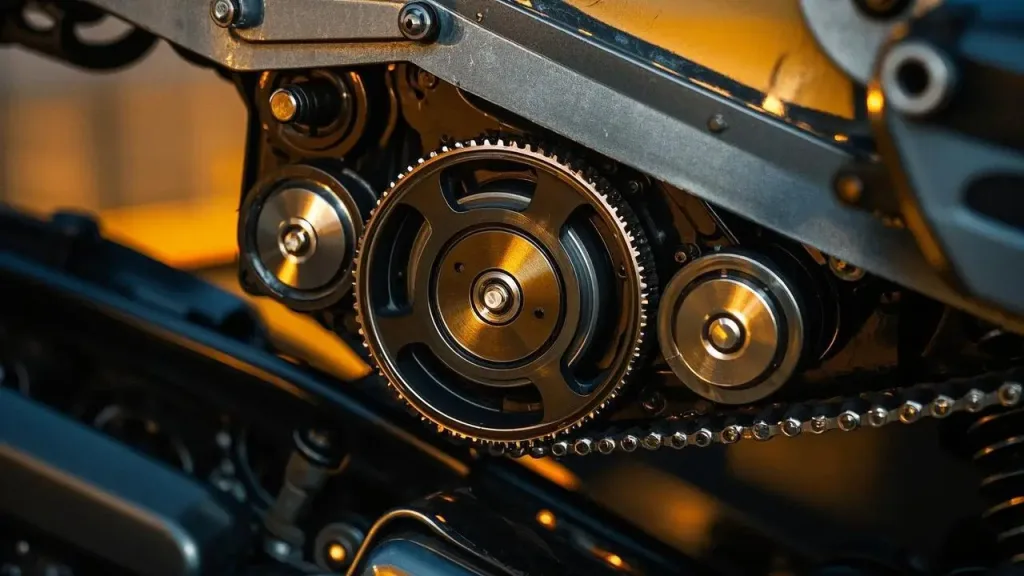
While both idler pulleys and tensioner pulleys are crucial components in your vehicle’s serpentine belt system, they serve distinct roles. Understanding their differences can help you identify potential issues and make informed decisions about maintenance and repairs.
Key Differences at a Glance
Here’s a quick comparison between idler pulleys and tensioner pulleys:
| Feature | Idler Pulley | Tensioner Pulley |
| Function | Guides and supports the serpentine belt, ensuring alignment. | Maintains proper tension in the serpentine belt to prevent slippage. |
| Location | Typically fixed in place on the engine. | Mounted on a spring-loaded or hydraulic tensioning system. |
| Movement | Stationary with no active tensioning capability. | Moves dynamically to adjust belt tension. |
| Signs of Failure | Noisy operation, visible wear, or misaligned belt. | Belt slipping, excessive vibration, or loss of tension. |
| Replacement Complexity | Generally easier to replace due to its fixed position. | More complex, as it involves adjusting or replacing the tensioning mechanism. |
Detailed Explanation
Idler Pulley:
- The idler pulley is primarily responsible for guiding and supporting the serpentine belt.
- It doesn’t actively apply tension but ensures the belt runs smoothly and stays aligned across various components like the alternator and AC compressor.
- A failing idler pulley can lead to belt misalignment or damage, causing engine performance issues.
- Unlike the idler pulley, the tensioner pulley’s primary job is to maintain proper tension on the serpentine belt.
- It’s often part of a spring-loaded or hydraulic system that dynamically adjusts tension as the engine operates.
- If the tensioner pulley fails, the belt may slip, leading to malfunctioning accessories or even a snapped belt.
How to Identify Them in Your Vehicle
- Idler Pulley: Look for a stationary pulley with no spring mechanism attached. It’s usually bolted directly to the engine.
- Tensioner Pulley: Check for a pulley connected to a spring-loaded or hydraulic arm, often positioned to adjust belt tension automatically.
Symptoms of a Bad Idler Pulley
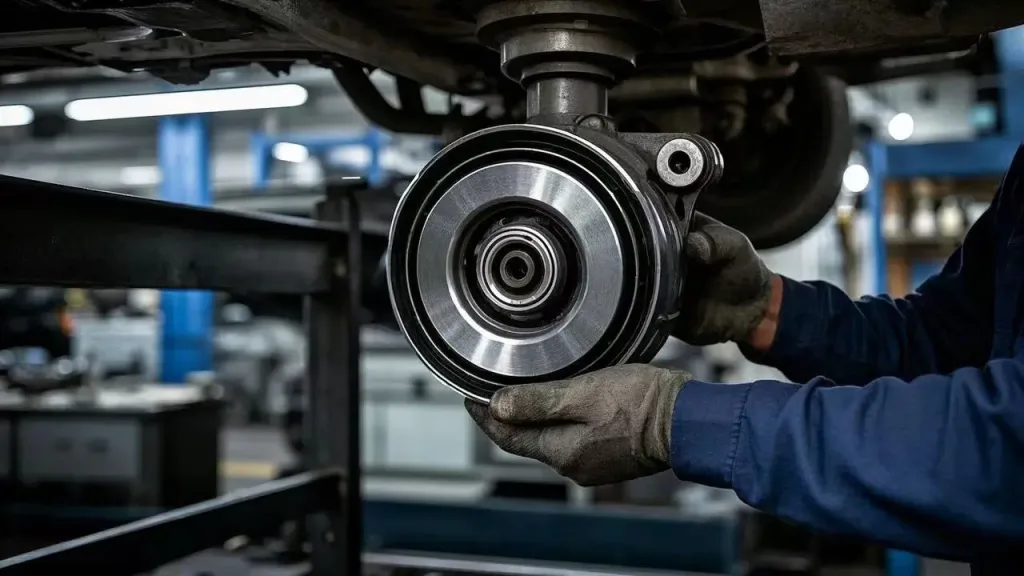
A failing idler pulley can cause various issues in your vehicle’s engine belt system. Below, we’ll discuss eight distinct symptoms of a bad idler pulley, helping you identify and address the problem before it escalates into more severe damage.
1. Squealing or Chirping Noises
One of the most common signs of a bad idler pulley is strange noises coming from the engine bay. These include:
- Squealing: A high-pitched squeal usually indicates that the pulley’s bearing is worn or the pulley is misaligned.
- Chirping: A rhythmic chirping sound occurs when the belt slips slightly on the pulley, often due to a minor misalignment or damaged bearing.
These noises may become louder as the engine revs or under specific conditions, such as during a cold start.
2. Grinding or Rattling Sounds
If the internal bearings of the idler pulley are severely damaged, you may hear:
- Grinding: This occurs when the bearings are broken or worn, causing metal-to-metal contact.
- Rattling: A loose or wobbling pulley can create a rattling noise while the engine is running.
These sounds indicate a more advanced stage of wear and require immediate attention.
3. Misaligned Serpentine Belt
A failing idler pulley can cause the serpentine belt to misalign. This can result in:
- The belt appearing off-center or wobbling as it moves over the pulleys.
- Uneven wear patterns on the belt, which may lead to premature belt failure.
If the belt misalignment isn’t corrected, it can damage other components in the belt system.
4. Belt Slippage or Looseness
A worn or damaged idler pulley can no longer maintain proper tension on the serpentine belt. This causes the belt to:
- Slip off the pulley, resulting in erratic operation of engine components.
- Become loose, reducing the efficiency of accessories like the alternator, power steering pump, and air conditioning compressor.
Belt slippage can also lead to further damage to the belt and other pulleys.
5. Visible Pulley Wear or Damage
A physical inspection of the idler pulley can reveal visual signs of wear or damage, including:
- Cracks or Chips: These indicate structural weakness and may lead to pulley failure.
- Rust or Corrosion: Exposure to moisture and environmental conditions can weaken the pulley over time.
- Surface Polishing or Uneven Wear: This shows that the pulley is not functioning correctly and may be causing belt misalignment.
6. Burning Rubber Smell
A slipping serpentine belt caused by a bad idler pulley can produce friction, generating heat and creating a strong burning rubber odor. This smell is often accompanied by visible smoke from under the hood in severe cases.
If you notice this symptom, it’s a clear warning sign that the belt system needs immediate inspection.
7. Loss of Function in Engine Accessories
The serpentine belt powers multiple essential components, such as the alternator, water pump, power steering pump, and air conditioning compressor. A failing idler pulley can cause the belt to underperform or stop altogether, resulting in:
- Dim or Flickering Headlights: Caused by reduced alternator output.
- Hard Steering: Due to a malfunctioning power steering pump.
- Overheating Engine: If the water pump fails to circulate coolant properly.
- No Air Conditioning: Resulting from a non-functional AC compressor.
8. Complete Belt Failure
In advanced stages, a damaged idler pulley can cause the serpentine belt to break entirely. When this happens:
- The vehicle may lose power steering, alternator output, and cooling system functionality.
- You may experience a sudden breakdown, leaving the vehicle inoperable until the belt and pulley are replaced.
Complete belt failure can also cause collateral damage to nearby engine components, leading to more expensive repairs.
How Much Does an Idler Pulley Replacement Cost?
The cost of replacing an idler pulley can vary depending on several factors, including the make and model of your vehicle, the quality of the replacement part, and labor costs if you hire a mechanic.
Factors Affecting the Cost
- Vehicle Type: Luxury or high-performance vehicles often have more expensive parts.
- Labor Rates: Mechanics charge different hourly rates depending on their location and expertise.
- Part Quality: OEM (Original Equipment Manufacturer) parts are generally pricier than aftermarket options.
Typical Price Range
- Parts Only: Expect to pay between $20 and $100 for the idler pulley itself.
- Labor Costs: If you’re not replacing it yourself, labor can add $50 to $150.
- Total Replacement Cost: On average, you’ll spend $70 to $250.
DIY replacement can save you labor costs, but it’s essential to have the right tools and knowledge.
Best Idler Pulley Brands
When it comes to replacing your idler pulley, choosing a high-quality brand can make all the difference. Some trusted brands include:
1. Gates
Gates is a leading manufacturer known for durable and reliable belt drive components. Their idler pulleys are built to last and come highly recommended by professionals.
2. Dayco
Dayco is another top-tier brand offering a wide range of belt and pulley components. Their products are designed to meet or exceed OEM specifications.
3. ACDelco
As General Motors’ official parts supplier, ACDelco provides excellent options for GM vehicles and other makes.
4. Motorcraft
If you own a Ford vehicle, Motorcraft idler pulleys are an excellent choice for quality and compatibility.
Key Features to Look For
- Sturdy construction with high-grade materials.
- Smooth and quiet operation.
- Compatibility with your vehicle’s make and model.
Investing in a reputable brand ensures better performance and a longer lifespan for your idler pulley.
Diagnosing and Fixing Noisy Idler Pulleys
A noisy idler pulley is often the first sign of trouble, but how do you pinpoint the issue and fix it?
Diagnosing the Noise
- Listen Closely: Use a mechanic’s stethoscope or a long screwdriver to isolate the noise source.
- Inspect the Pulley: Check for visible wear, cracks, or misalignment.
- Test the Bearing: Spin the pulley by hand. A bad bearing will feel rough or make noise.
Fixing the Problem
- DIY Repairs: If you’re confident, replacing an idler pulley is a straightforward process. You’ll need basic tools like a socket wrench and a serpentine belt tool.
- Professional Help: For those less mechanically inclined, a mechanic can quickly diagnose and replace the faulty pulley.
Safety Tip: Always disconnect the battery before working on your vehicle’s belt system to avoid accidental injury.
Preventive Maintenance for Idler Pulleys
The best way to avoid a failing idler pulley is through regular maintenance. Here’s how to keep it in top shape:
Routine Checks
- Inspect the pulley and belt for visible wear every 10,000 miles.
- Look for cracks, fraying, or misalignment in the drive belt.
Lubrication
Although idler pulleys are typically sealed and require no maintenance, keeping the surrounding components clean and lubricated can reduce wear.
Belt Replacement
Replacing the serpentine belt as recommended by your vehicle’s manufacturer can prolong the life of the idler pulley. A worn belt places extra stress on the pulley.
Professional Inspections
During routine vehicle maintenance, ask your mechanic to check the pulley’s condition. Early detection of wear can save you time and money.
FAQ/People Also Ask
1. What happens if an idler pulley fails completely?
If the idler pulley fails, the drive belt may slip off or break, causing critical components like the alternator, power steering, and air conditioning to stop working. In severe cases, it can lead to engine overheating.
2. How long does an idler pulley last?
On average, an idler pulley lasts between 50,000 and 100,000 miles. However, its lifespan depends on driving conditions and maintenance habits.
3. Can I drive with a bad idler pulley?
It’s not recommended. A failing idler pulley can cause the belt to slip or snap, potentially leaving you stranded or damaging other engine components.
4. How do I know if my idler pulley needs replacement?
Look for symptoms such as squealing noises, visible wear, or misalignment in the drive belt. If in doubt, have a mechanic inspect it.
5. Is replacing an idler pulley a DIY job?
Yes, if you have basic mechanical skills and the right tools. However, if you’re unsure, it’s best to consult a professional.
Get a High-Quality Idler Pulley Replacement for Your Ride
A failing idler pulley can lead to significant vehicle problems if not addressed promptly. Replacing it with a high-quality part ensures your engine’s belt system continues running smoothly. Choosing the right manufacturer is essential for durability, reliability, and performance. One trusted name in the industry is WanasignAuto.com, known for its exceptional automotive components.
Why Choose WanasignAuto.com for Your Idler Pulley Replacement?
WanasignAuto.com has built a strong reputation as a manufacturer of premium automotive parts. Here’s why they stand out:
- Durable Materials: Their idler pulleys are made from high-grade metals and reinforced plastics, ensuring they withstand extreme heat and stress.
- Precision Engineering: Each pulley is crafted to OEM specifications, guaranteeing a perfect fit for your vehicle.
- Reliable Performance: WanasignAuto’s products are designed to minimize friction and extend the life of your serpentine belt system.
- Comprehensive Testing: Every idler pulley undergoes rigorous quality testing to ensure top-tier performance and safety.
Don’t Wait—Replace Your Idler Pulley Today
If your vehicle is showing symptoms of a bad idler pulley, acting quickly can prevent more expensive repairs. Visit WanasignAuto.com to explore their range of high-quality idler pulleys and find the perfect fit for your vehicle.
Keep your ride running smoothly with WanasignAuto’s dependable parts—they’re a name you can trust.



Add comment