

Top 6 Symptoms of a Malfunctioning Timing Chain Tensioner
The timing chain tensioner is a small but essential part of your vehicle’s engine. Its job is to keep the timing chain tight and properly aligned, ensuring the camshaft and crankshaft work together in perfect harmony. This synchronization is crucial for smooth engine operation, as it ensures the engine’s valves open and close at the right times during combustion.
When a timing chain tensioner begins to fail, it can lead to significant engine problems, including performance issues, increased noise, and even catastrophic engine damage. Identifying the symptoms early can save you from expensive repairs and prolong the life of your engine. In this article, we’ll cover everything you need to know about timing chain tensioners, the symptoms of a failing one, and how to address the issue.
What Is a Timing Chain Tensioner?
The timing chain tensioner is designed to maintain the correct amount of tension on the timing chain, preventing it from becoming too loose or tight. It works with the timing chain to ensure that the engine’s camshaft and crankshaft remain synchronized, a key factor in maintaining proper engine timing.
Types of Timing Chain Tensioners
- Hydraulic Tensioners: These use oil pressure to automatically adjust the chain’s tension as it stretches over time. They are common in modern engines.
- Spring-Loaded Tensioners: These use a spring to apply constant pressure on the chain. While simpler, they don’t adapt as well as hydraulic ones.
- Mechanical Tensioners: Found in older or high-performance engines, these are manually adjusted by a mechanic.
A properly functioning tensioner keeps the chain tight enough to avoid slack but not so tight that it causes excess wear.
Symptoms of a Bad Timing Chain Tensioner
Recognizing the symptoms of a failing timing chain tensioner early can save you from costly repairs. Here are the most common signs:
Unusual Engine Noise
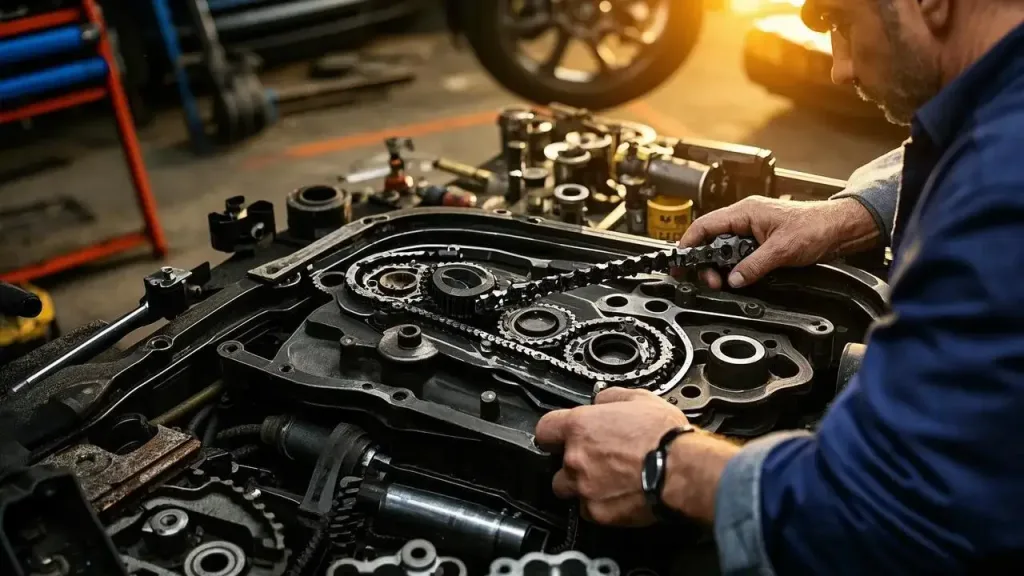
One of the first signs of a bad timing chain tensioner is a rattling or ticking noise from the engine, particularly during startup or at idle. This noise occurs because a loose timing chain slaps against other components, creating a distinct sound.
Check Engine Light
A failing tensioner can cause the timing chain to become misaligned, which triggers the check engine light. This often corresponds to diagnostic trouble codes like P0016 or P0017, which indicate issues with camshaft-crankshaft alignment.
Poor Engine Performance
A loose or failing tensioner can cause poor engine timing, leading to symptoms such as misfires, hesitation, reduced power, and poor fuel efficiency. These issues occur because the valves and pistons are no longer working in perfect synchronization.
Difficulty Starting the Engine
If the timing chain tensioner fails completely, it can disrupt the timing enough to make starting the engine difficult or even impossible. This is especially noticeable during cold starts.
Metal Shavings in Oil
As the timing chain wears down due to improper tension, it can produce metal shavings that end up in the engine oil. This is a warning sign of serious internal wear and should be addressed immediately.
Sudden Engine Stalling
A loose or broken timing chain caused by a failing tensioner can result in the engine stalling without warning. If the chain slips completely, it can lead to catastrophic engine damage.
Causes of a Failing Timing Chain Tensioner
Several factors can contribute to a failing timing chain tensioner, including:
· Lack of Maintenance: Irregular oil changes or using the wrong oil can lead to tensioner failure, particularly in hydraulic systems.
· Wear and Tear: High mileage engines naturally experience more wear on timing components.
· Manufacturing Defects: Poor-quality parts or factory defects can shorten the lifespan of the tensioner.
· Low Oil Pressure: In hydraulic tensioners, insufficient oil pressure can prevent the tensioner from working properly.
Consequences of Ignoring Timing Chain Tensioner Issues
Ignoring a bad timing chain tensioner can lead to:
- Timing Chain Failure: A broken chain can cause severe engine damage.
- Bent Valves or Damaged Pistons: If the timing is off, valves can collide with pistons, leading to costly repairs.
- Engine Replacement: In extreme cases, the entire engine may need to be replaced due to internal damage.
How to Fix a Bad Timing Chain Tensioner
1. Gather Necessary Tools and Parts
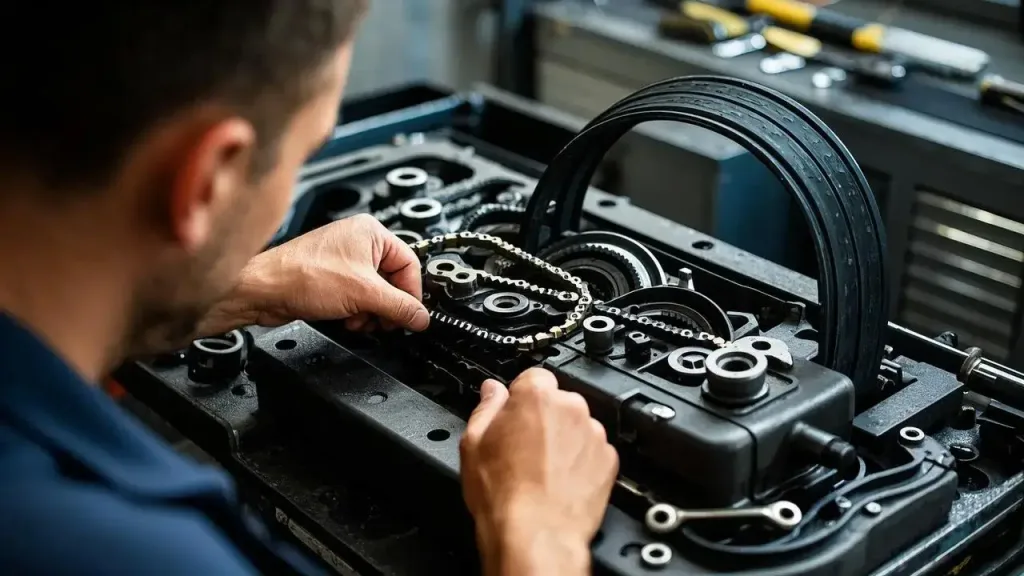
You will need a basic mechanic toolset, a torque wrench, a crankshaft pulley removal tool, and possibly a timing chain kit, depending on the condition of the chain and guides.
2. Prepare the Vehicle
- Disconnect the negative battery terminal to ensure safety.
- Drain the engine oil and coolant, as these may need to be removed to access the timing cover.
3. Remove Engine Components
- Remove the serpentine belt and any accessories blocking access to the timing cover.
- Detach the valve cover and other components as required.
- Carefully remove the timing cover to expose the timing chain and tensioner.
4. Inspect the Timing Components
- Check the timing chain, guides, and sprockets for wear or damage.
- If the chain or other components show significant wear, replace them alongside the tensioner.
5. Replace the Timing Chain Tensioner
- Remove the old tensioner and install the new one. Ensure it’s properly seated and aligned.
- Recheck the timing marks on the crankshaft and camshaft to ensure correct alignment.
6. Reassemble and Test
- Reinstall the timing cover and other removed components in reverse order.
- Refill the engine with oil and coolant.
- Start the engine and listen for any abnormal noises. Ensure the engine runs smoothly without warning lights.
Professional Repair Considerations
If you lack experience or the necessary tools, it’s best to have a professional handle the replacement. Incorrect timing or installation can lead to serious engine damage. Professional repair costs range from $500 to $1,500, depending on the make and model of your vehicle.
Preventative Maintenance Tips
To extend the life of your timing chain tensioner and avoid future issues:
- Regularly change the oil using the manufacturer-recommended type and grade.
- Inspect timing components during routine maintenance, especially in high-mileage vehicles.
- Address unusual engine noises promptly to prevent further damage.
Proper care and timely repairs will help keep your engine running smoothly and prevent costly breakdowns.
FAQs About Timing Chain Tensioners
1. How long does a timing chain tensioner last?
A timing chain tensioner typically lasts between 100,000 and 150,000 miles, depending on the vehicle and maintenance habits. Regular oil changes and using the correct oil type can extend its lifespan. However, it’s important to inspect the tensioner and timing chain as part of routine engine maintenance, especially for high-mileage vehicles.
2. Can a bad timing chain tensioner damage the timing chain?
Yes, a failing tensioner can lead to premature wear or damage to the timing chain. A loose chain caused by a faulty tensioner can slap against other components, stretch excessively, or even skip teeth on the sprockets, resulting in poor engine performance or catastrophic engine damage.
3. Is it safe to drive with a failing timing chain tensioner?
No, it’s not safe to drive with a failing timing chain tensioner. Ignoring the issue can result in significant engine damage, such as bent valves, damaged pistons, or even a broken timing chain. If you suspect your tensioner is failing, it’s best to address the problem immediately to avoid costly repairs or a complete engine failure.
4. Can I replace a timing chain tensioner myself?
Replacing a timing chain tensioner is possible for experienced DIY mechanics with the right tools and knowledge. However, it’s a complex and labor-intensive process that often involves removing engine components and reassembling them correctly. For most car owners, it’s advisable to have a professional mechanic handle the job to ensure it’s done properly.
5. How much does it cost to replace a timing chain tensioner?
The cost of replacing a timing chain tensioner varies depending on your vehicle’s make and model, as well as whether you choose to do it yourself or hire a professional. On average, the cost ranges from $500 to $1,500, with labor making up a significant portion of the expense.
6. Can a timing chain tensioner be repaired, or does it need to be replaced?
In most cases, a bad timing chain tensioner needs to be replaced rather than repaired. This is because tensioners are not designed to be serviceable, and their failure often indicates wear or damage that cannot be fixed.
7. Should I replace the timing chain along with the tensioner?
It’s often recommended to replace the timing chain, guides, and sprockets when replacing the tensioner, especially in high-mileage vehicles. This ensures all timing components are in good condition and reduces the risk of future problems.
8. What happens if a timing chain tensioner completely fails?
If the tensioner completely fails, the timing chain can become too loose, slip off the sprockets, or even break. This can cause severe engine damage, including bent valves, damaged pistons, and, in extreme cases, a complete engine failure. Immediate repair or replacement is critical to avoid these consequences.
Where to Get a New Timing Chain Tensioner for Your Vehicle
When looking for a reliable timing chain tensioner, quality should always be your top priority. Trusted manufacturers like WanasignAuto offer high-performance timing chain tensioners designed to meet or exceed OEM standards. WanasignAuto’s parts are made from durable materials and engineered with precision, ensuring a perfect fit and long-lasting performance for a wide range of vehicles.
You can purchase WanasignAuto timing chain tensioners directly from their official website or through authorized distributors. By choosing WanasignAuto, you can trust that you’re getting a cost-effective solution without compromising on quality, backed by a warranty to ensure your satisfaction.



Add comment