

How much does it cost to replace a water pump?
Your car’s water pump is essential for maintaining engine temperature by circulating coolant through the cooling system. If it fails, overheating and significant engine damage can occur. In this article, we’ll cover everything you need to know about water pumps, from costs to replacement considerations.
Where Is The Water Pump Located?
The water pump is typically found at the front of the engine, bolted to the timing cover or engine block. Its location depends on the car’s design:
- In vehicles with a serpentine belt, the water pump is driven by the belt and is located on the engine’s accessory side.
- In vehicles with a timing belt or chain, the pump is often tucked inside the timing cover and driven by the timing mechanism.
Finding the water pump usually requires a visual inspection or consulting your vehicle’s repair manual.
How Much Does It Cost to Replace a Water Pump?
The cost to replace a water pump varies depending on the vehicle make and model, the location of the pump, and labor rates in your area. Below is a breakdown of costs:
Cost Breakdown
| Expense | Price Range | Description |
| Parts | $50 to $500 | Water pump prices depend on the vehicle and whether you’re using OEM (Original Equipment Manufacturer) or aftermarket parts. |
| Labor | $150 to $800 | Labor costs vary depending on the pump’s accessibility. Easier jobs (like serpentine-belt-driven pumps) cost less than timing-belt-driven pumps. |
| Total Cost | $300 to $1,000 (average) | Most vehicles fall within this range. Luxury or complex vehicles may cost over $1,500 due to higher parts and labor expenses. |
Examples of Costs by Vehicle Type
| Vehicle Type | Approximate Cost | Notes |
| Compact Car | $300 to $600 | Relatively simple engine designs make replacement quicker and cheaper. |
| Mid-Size Sedan or SUV | $500 to $1,000 | Average costs due to moderate complexity and labor time. |
| Luxury or Performance Car | $1,000 to $1,500+ | Complex layouts and higher parts costs drive up prices. |
Tip: If your water pump is driven by the timing belt, it’s often cost-effective to replace both components simultaneously, as the labor overlap can save money.
Things That Can Go Wrong With Your Car’s Water Pump
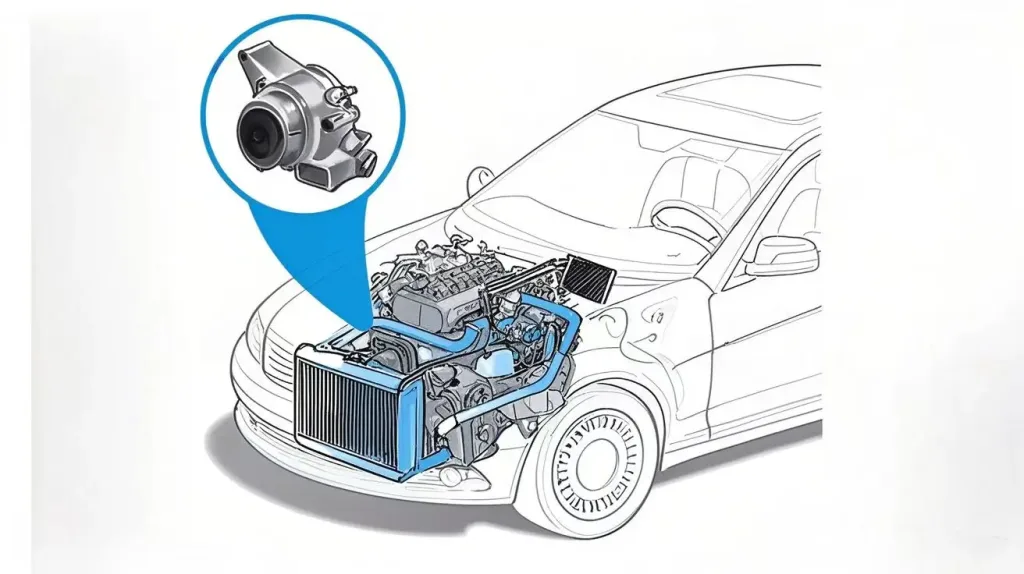
A failing water pump can cause:
- Coolant Leaks: Worn seals and gaskets can allow coolant to escape.
- Overheating: A damaged impeller or failed bearing can reduce coolant circulation, leading to overheating.
- Noisy Operation: Grinding or whining sounds may indicate worn-out bearings.
- Steam or Leaks Under the Vehicle: Visible coolant puddles or overheating symptoms can signal water pump failure.
If any of these issues arise, prompt inspection and repair are critical to prevent engine damage.
Factors Determining The Life Of A Water Pump
The lifespan of a water pump depends on:
- Coolant Quality: Using the correct coolant and replacing it regularly prevents corrosion and buildup.
- Driving Conditions: Frequent stop-and-go traffic or heavy towing can stress the cooling system.
- Component Quality: OEM water pumps generally last longer than cheaper aftermarket options.
- Maintenance History: Neglecting coolant flushes and belt inspections can reduce water pump lifespan.
On average, water pumps last 60,000 to 100,000 miles, often aligned with timing belt replacement schedules.
Can You Repair a Water Pump Instead of Replacing It?
Water pumps are rarely repairable because their main components—seals, bearings, and impellers—are difficult to rebuild. Instead, replacement is the standard solution. Replacing the pump ensures reliability and prevents recurring problems.
Do You Need to Replace Your Water Pump and Timing Belt at the Same Time?
In many cases, replacing the water pump and timing belt at the same time is highly recommended, especially if your water pump is driven by the timing belt. Here’s why:
Why Replace Them Together?
Shared Labor Costs:
The timing belt and water pump are often located in the same area of the engine. Replacing the timing belt requires removing components that also give access to the water pump. Doing both jobs at once eliminates the need for duplicate labor, saving you money in the long run.
Similar Lifespan:
Both the timing belt and water pump typically last around 60,000 to 100,000 miles. Replacing one without the other increases the risk of a failure shortly after, which would require repeating the labor-intensive process.
Preventative Maintenance:
A failing water pump can damage a new timing belt, and a broken timing belt can lead to catastrophic engine damage. Replacing them together ensures both components are fresh and working efficiently.
When It’s Not Necessary
If your water pump is driven by a serpentine belt (not the timing belt), there’s no direct connection between the two. In this case, replacing them together isn’t necessary unless the pump shows signs of wear or failure.
What Happens If You Don’t Replace Them Together?
- If the water pump fails after a new timing belt is installed, you’ll need to pay for labor to remove the belt again, doubling your repair costs.
- Similarly, if the timing belt breaks after a new water pump is installed, it can cause severe engine damage in interference engines.
Professional Recommendation
If your car’s timing belt drives the water pump, replacing both at the same time is a smart investment. This approach minimizes long-term repair costs and helps ensure your engine runs smoothly for years to come.
Are Water Pumps Covered Under Warranty?
Water pumps are sometimes covered under:
- Factory Warranties: Many new cars offer coverage for the water pump within the 3-5 year or 36,000-60,000 mile warranty period.
- Extended Warranties: Some extended warranties include water pump replacement, but it’s not universal. Always check your warranty details.
- Aftermarket Warranties: Reputable replacement water pumps often come with warranties ranging from 1 year to lifetime, depending on the brand.
Summary
Replacing a water pump is an essential repair that varies in cost depending on the car and complexity. Regular maintenance, such as coolant flushes and belt inspections, can extend its life and reduce the risk of failure. While it may seem expensive upfront, replacing a failing water pump promptly helps prevent costly engine damage.
FAQ
Q: How do I know if my water pump is failing?
A: Common symptoms include coolant leaks, engine overheating, grinding noises, or visible steam from the engine bay.
Q: Can I drive with a bad water pump?
A: No. Driving with a failing water pump can cause engine overheating and serious damage.
Q: How long does it take to replace a water pump?
A: It can take anywhere from 2 to 8 hours, depending on the vehicle’s design and the location of the water pump.
Q: Is replacing a water pump a DIY job?
A: It can be for experienced DIYers with the right tools, but for complex setups (e.g., timing belt-driven pumps), professional help is recommended.
Q: What is the best way to extend the life of my water pump?
A: Use the correct coolant, replace it at the recommended intervals, and maintain proper belt tension.



Add comment