

What’s the Best Way to Clean a Throttle Body?
The throttle body is a crucial part of your vehicle’s engine, controlling the amount of air entering the engine to ensure optimal performance. Over time, it can accumulate carbon buildup and dirt, which may lead to rough idling, poor acceleration, and even a decrease in fuel efficiency. This article will guide you through the process of cleaning a throttle body, the signs that it needs cleaning, and tips to maintain it for long-term engine health.
What is a Throttle Body?
A throttle body is a critical component of the air intake system in your engine. It houses a throttle plate (or valve) that regulates the airflow entering the engine based on the position of the accelerator pedal. As you press the gas pedal, the throttle plate opens, allowing more air into the engine. This is mixed with fuel, enabling combustion to power your car.
The throttle body also contains sensors like the Throttle Position Sensor (TPS) and the Idle Air Control (IAC) valve, which monitor and control the air-fuel mixture and idle speed. A clean throttle body ensures that these sensors function correctly, leading to smoother engine performance.
Why Clean Your Throttle Body?
Cleaning your throttle body isn’t just a maintenance task—it’s a performance booster. Here’s why it’s important:
Improved Engine Performance: A clean throttle body ensures proper airflow, leading to smoother acceleration and idling.
Better Fuel Efficiency: When the throttle body is clogged, the engine works harder, consuming more fuel.
Prevent Costly Repairs: Regular cleaning can prevent issues like stalling, rough idling, and even engine damage.
Signs Your Throttle Body Needs Cleaning
The throttle body plays a key role in controlling airflow into your engine, so when it gets dirty or clogged, it can lead to a range of performance issues. Here are some common signs that your throttle body might need a good cleaning:
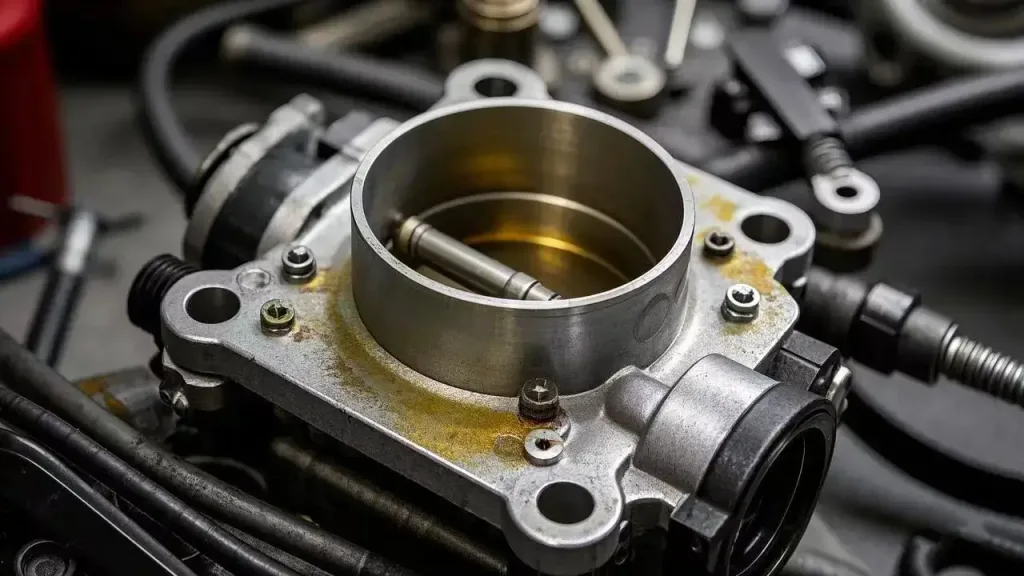
Rough Idling or Stalling
A dirty throttle body can cause irregular idling or even cause the engine to stall when it’s at a stop. If your car’s engine is idling roughly or shaking while in neutral or park, it could be due to a buildup of carbon and dirt in the throttle body restricting airflow.
Hesitation or Poor Acceleration
If you notice a delay or hesitation when you press the accelerator pedal, it could indicate that the throttle body is not opening or closing properly due to grime buildup. This can affect the air-fuel mixture, leading to sluggish acceleration.
Increased Fuel Consumption
A dirty throttle body can cause the engine to burn more fuel than necessary as it struggles to get the right amount of air for combustion. If your fuel economy has dropped unexpectedly, this could be a culprit.
Check Engine Light (CEL)
A malfunctioning throttle position sensor (TPS) or idle air control (IAC) valve due to carbon buildup can trigger the Check Engine Light. If the CEL comes on, it’s a good idea to inspect the throttle body and perform a cleaning, especially if you notice any performance issues.
Unusual Engine Sounds
If you hear strange engine noises like popping, sputtering, or inconsistent revving, it may be due to airflow restrictions caused by a dirty throttle body. These sounds can indicate that the air-fuel ratio is off, often as a result of contaminants in the throttle body.
Tools and Materials Needed
Before you start, gather these tools and materials:
Throttle Body Cleaner: Use a specialized cleaner (e.g., CRC Throttle Body Cleaner) to avoid damaging sensitive components.
Screwdrivers and Socket Wrench: For removing the air intake tube and throttle body.
Microfiber Cloths and Soft-Bristle Brush: For scrubbing away dirt and grime.
Safety Gear: Gloves and safety glasses to protect yourself.
Optional: Air compressor for drying.
Step-by-Step Guide to Cleaning a Throttle Body
Cleaning the throttle body is a relatively straightforward process, but it requires attention to detail. Follow these steps to ensure you clean it thoroughly and safely:
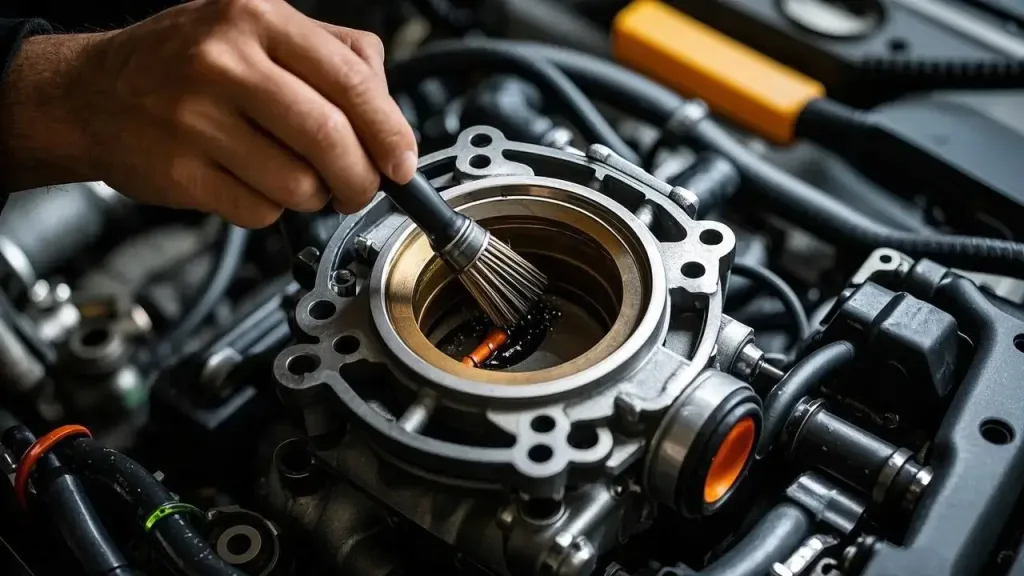
1. Preparation
- Turn Off the Engine: Ensure the engine is completely turned off, and the key is removed from the ignition.
- Disconnect the Battery: For safety, disconnect the negative terminal of the battery to prevent any electrical issues while you’re working on the throttle body.
- Locate the Throttle Body: The throttle body is typically located between the air filter and the intake manifold. It’s usually easy to spot, as it’s the part with the metal throttle plate inside.
- Remove Components Blocking Access: Use a screwdriver or socket set to remove any air intake hoses or covers that are blocking access to the throttle body. Take note of any components you remove so you can easily reassemble everything later.
2. Inspect for Damage
- Before you start cleaning, visually inspect the throttle body for any visible cracks, leaks, or excessive wear. Check the throttle plate for any signs of damage or carbon buildup. If you notice any significant damage, consider replacing the throttle body or getting professional help.
3. Spray Throttle Body Cleaner
- Apply Cleaner: Generously spray the throttle body cleaner into the throttle body, focusing on the throttle plate and the inner walls. Hold the cleaner about 6-8 inches away from the throttle body to avoid over-spraying.
- Let It Sit: Allow the cleaner to sit for a few minutes to break down carbon deposits, grime, and dirt. This will make it easier to clean.
4. Clean the Throttle Plate
- Scrub Away Buildup: Use a microfiber cloth or soft brush to gently scrub the throttle plate and the surrounding areas. Be careful not to damage any sensors, such as the throttle position sensor (TPS) or the idle air control (IAC) valve.
- Focus on Carbon Deposits: If there’s stubborn carbon buildup, you can use a brush or a cloth to gently work on those areas. The buildup may take a little extra scrubbing, but don’t use anything too abrasive that could scratch the surface.
5. Wipe Off Excess Cleaner
- Once you’ve scrubbed all the accessible areas, wipe off any excess cleaner, dirt, and carbon with a clean microfiber cloth. Make sure the throttle plate moves freely and isn’t obstructed by any debris.
- If needed, spray a little more cleaner and wipe again to remove any lingering grime.
6. Clean the Idle Air Control (IAC) Valve (If Accessible)
- If your throttle body has an IAC valve and you can safely access it, you can clean this part as well. Use the throttle body cleaner and a soft brush to gently clean the valve. Be careful not to disturb or damage the valve’s components. Some IAC valves are sensitive, so consult your vehicle’s manual if you’re unsure whether to clean it.
7. Reassemble the Components
- Once everything is clean and dry, carefully reassemble any parts or hoses you removed. Be sure all connections are secure, and everything is back in place.
- Reconnect the Battery: Don’t forget to reconnect the negative battery terminal.
8. Start the Engine and Test
- Start the engine and let it idle. It might run a little rough for the first minute as the system adjusts to the clean throttle body, but it should stabilize after a short time.
- If the car continues to idle roughly or if there are still performance issues, there may be other underlying problems. In this case, it’s worth getting the car inspected by a professional mechanic.
Common Mistakes to Avoid
When cleaning your throttle body, avoid these common mistakes:
- Using the Wrong Cleaner: Never use a harsh cleaner that can damage the sensors or internal components. Always opt for a product specifically designed for throttle bodies.
- Ignoring the Sensors: Be extra careful around sensitive components like the TPS or IAC valve. Do not apply cleaner directly to them or scrub them harshly.
- Over-spraying Cleaner: Excess cleaner can drip into the intake manifold, potentially causing engine issues. Spray sparingly and wipe away excess.
- Failing to Inspect: Always inspect the throttle body for damage or wear before cleaning. If there’s significant wear or cracks, a replacement may be necessary.
Tips for Maintaining a Clean Throttle Body
Maintaining your throttle body is just as important as cleaning it. Here are a few tips to keep your throttle body in top condition:
- Regular Inspections: Check the throttle body every 30,000–50,000 miles or as part of your regular vehicle maintenance.
- Change Your Air Filter: A clogged air filter can cause excess dirt to reach the throttle body. Replace your air filter regularly.
- Use Quality Fuel Additives: Using fuel system cleaners helps keep the throttle body cleaner over time.
- Keep the Intake System Clean: Regularly inspect and clean the air intake system to prevent dirt from building up inside the throttle body.
When to Seek Professional Help
While cleaning the throttle body is a relatively simple DIY job, there are instances when you may need professional help:
- Persistent Engine Problems: If cleaning the throttle body doesn’t resolve symptoms like rough idling or poor acceleration, other components like sensors, fuel injectors, or the ECU may need professional diagnosis.
- Damaged Components: If the throttle body is cracked, worn, or if sensors are malfunctioning, it’s best to consult a mechanic for a proper replacement.
- Lack of Experience: If you’re uncomfortable handling engine parts or aren’t sure about your cleaning techniques, it’s always safer to leave it to a professional mechanic.
Frequently Asked Questions (FAQs)
Q1: How often should I clean my throttle body?
It’s generally recommended to clean your throttle body every 30,000 to 50,000 miles, but this can vary depending on your driving habits and the condition of your engine. If you notice symptoms like rough idling, poor acceleration, or decreased fuel economy, it’s a good idea to clean it sooner.
Q2: Can I clean the throttle body myself, or do I need a professional?
You can absolutely clean the throttle body yourself, especially if you have basic mechanical knowledge and the right tools. It’s a relatively simple job that requires only a few common tools and throttle body cleaner. However, if you’re uncomfortable working on your vehicle or if the problem persists after cleaning, it’s best to consult a professional mechanic.
Q3: What happens if I don’t clean my throttle body?
Over time, carbon buildup and dirt can restrict airflow to your engine, leading to a variety of problems like poor acceleration, rough idling, and increased fuel consumption. If left untreated, a dirty throttle body can cause engine misfires or even damage sensors, which could lead to more expensive repairs.
Q4: Can a dirty throttle body trigger the Check Engine Light (CEL)?
Yes, a dirty throttle body can affect the performance of sensors like the throttle position sensor (TPS) or the idle air control (IAC) valve, which can trigger the Check Engine Light. Cleaning the throttle body may resolve this issue, but if the CEL persists, further diagnostic testing may be needed.
Q5: Is it safe to use regular cleaning products on my throttle body?
No, you should only use a cleaner that is specifically designed for throttle bodies. Regular cleaning products may contain chemicals that can damage sensitive components, such as sensors or the throttle plate. Always choose a product that is formulated for automotive use and safe for all parts of the throttle body.
Q6: Can cleaning the throttle body improve fuel efficiency?
Yes, cleaning the throttle body can improve fuel efficiency. A dirty throttle body can restrict airflow, leading to an inefficient air-fuel mixture. By cleaning it, you ensure that the engine gets the proper amount of air, which can help optimize fuel combustion and improve mileage.
Q7: Will cleaning the throttle body fix all engine performance issues?
Cleaning the throttle body can resolve issues related to airflow, but if your vehicle has other problems (e.g., fuel injectors, spark plugs, or sensors), it may not be a complete fix. If cleaning the throttle body doesn’t solve the performance issues, further diagnostics may be necessary.
Q8: Should I clean the throttle body if my vehicle has a turbocharged engine?
Yes, throttle bodies in turbocharged engines also accumulate carbon buildup over time, just like those in non-turbocharged engines. Cleaning the throttle body in a turbocharged engine is just as important for maintaining smooth performance and preventing airflow issues.
Conclusion
Cleaning your throttle body is a simple yet effective way to maintain your vehicle’s performance and longevity. By following this guide, you can ensure your engine runs smoothly, saves fuel, and avoids costly repairs. Regular maintenance is key to keeping your vehicle in top shape, so don’t overlook this important task.



Add comment