

How to Choose Between OEM and Aftermarket Engine Parts
When it comes to maintaining or repairing your vehicle, selecting the right engine parts is crucial for performance, durability, and cost-effectiveness. One of the most common dilemmas car owners and mechanics face is choosing between OEM (Original Equipment Manufacturer) engine parts and aftermarket engine parts.
Both options have their advantages and disadvantages, depending on factors such as budget, quality, fitment, and performance needs. In this guide, we’ll break down the key differences and help you make an informed decision.
What Are OEM Engine Parts?
OEM (Original Equipment Manufacturer) engine parts are components produced by the same company that built your vehicle’s original parts or an authorized supplier. These parts are designed to match the exact specifications of the components that came with your car when it was first assembled.
When you purchase an OEM engine part, you’re getting a direct replacement that ensures compatibility, performance, and reliability identical to the original factory-installed component.
Benefits of OEM Engine Parts
✔ Perfect Fit and Compatibility – Since OEM parts are made specifically for your vehicle’s make and model, they fit seamlessly without the need for modifications.
✔ Consistent Quality – OEM parts meet the car manufacturer’s strict quality standards, ensuring durability and reliability.
✔ Manufacturer Warranty – Most OEM engine parts come with a warranty, offering peace of mind in case of defects or failures.
✔ Reliable Performance – Designed to maintain your vehicle’s factory performance and longevity.
Drawbacks of OEM Engine Parts
✘ Higher Cost – OEM parts are often more expensive than aftermarket alternatives due to branding and dealership markups.
✘ Limited Availability – Typically only available through authorized dealerships, which may lead to longer wait times.
✘ No Performance Upgrades – OEM parts are built to factory specifications, so they don’t offer performance enhancements like some aftermarket alternatives.
What Are Aftermarket Engine Parts?
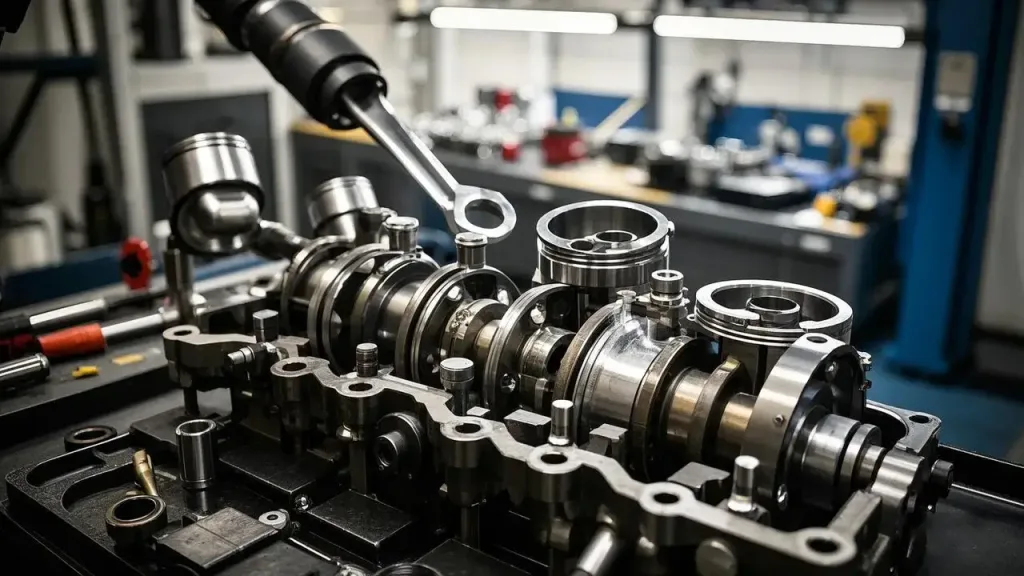
Aftermarket engine parts are components made by third-party manufacturers that are designed to replace or enhance OEM (Original Equipment Manufacturer) parts. These parts are not produced by the vehicle’s original manufacturer but are engineered to meet or exceed OEM specifications.
Aftermarket engine parts come in a wide range of options, from direct replacement parts that match OEM quality to high-performance upgrades designed to improve power, efficiency, or durability.
Benefits of Aftermarket Engine Parts
✔ More Affordable – Aftermarket parts are often priced lower than OEM parts, making them a cost-effective alternative.
✔ Wider Selection – With multiple brands and variations available, you can choose parts that fit your budget and performance needs.
✔ Potential Performance Enhancements – Some aftermarket parts are designed to outperform OEM components, offering better horsepower, fuel efficiency, or longevity.
✔ Easier Availability – Available from multiple retailers, both online and in stores, ensuring quicker access to the parts you need.
Drawbacks of Aftermarket Engine Parts
✘ Quality Can Vary – While some brands produce high-quality parts, others may cut corners, leading to durability or fitment issues.
✘ Possible Fitment Issues – Since aftermarket parts are made for a range of vehicles, some may require slight modifications to fit properly.
✘ Warranty Differences – Unlike OEM parts, not all aftermarket components come with a warranty, and coverage may vary by manufacturer.
Differences Between OEM and Aftermarket Engine Parts
When choosing between OEM (Original Equipment Manufacturer) engine parts and aftermarket engine parts, it’s important to understand their key differences. While both options serve the same purpose—keeping your vehicle running efficiently—their quality, price, availability, and performance potential can vary significantly.
1. Price
- OEM Parts: Generally more expensive due to manufacturer branding and dealership markups.
- Aftermarket Parts: Often more affordable, with a wider range of pricing options to suit different budgets.
2. Quality & Reliability
- OEM Parts: Manufactured to meet strict factory specifications, ensuring consistent quality and durability.
- Aftermarket Parts: Quality varies by manufacturer; some brands match or exceed OEM quality, while others may cut corners.
3. Fitment & Compatibility
- OEM Parts: Designed specifically for your vehicle, ensuring a perfect fit without modifications.
- Aftermarket Parts: Some parts are designed for multiple vehicle models, which may require slight adjustments or modifications during installation.
4. Performance & Customization
- OEM Parts: Maintain stock performance, ensuring your vehicle runs as originally designed.
- Aftermarket Parts: Some parts are engineered to enhance performance, improve fuel efficiency, or increase durability beyond OEM standards.
5. Availability & Convenience
- OEM Parts: Typically available only at authorized dealerships, which may lead to higher prices and longer wait times.
- Aftermarket Parts: Sold by various retailers online and in stores, making them easier to find and purchase.
6. Warranty & Support
- OEM Parts: Usually backed by a manufacturer’s warranty, offering peace of mind.
- Aftermarket Parts: Warranty policies vary; some brands provide strong warranties, while others offer limited or no coverage.
Comparison Table: OEM vs. Aftermarket Engine Parts
| Feature | OEM Engine Parts | Aftermarket Engine Parts |
| Price | More expensive | More affordable |
| Quality Control | Consistently high | Varies by manufacturer |
| Fitment | Perfect fit for your vehicle | May require modifications |
| Performance | Matches factory specifications | Some options offer performance enhancements |
| Availability | Limited to dealerships | Widely available online and in stores |
| Warranty | Usually included | May or may not have a warranty |
How to Choose Between OEM and Aftermarket Engine Parts
To determine whether OEM or aftermarket parts are the right choice for your vehicle, consider the following factors:
1. Vehicle Age and Condition
- If your car is new or under warranty, sticking with OEM parts ensures compatibility and protects your warranty.
- If your vehicle is older or out of warranty, aftermarket parts can offer cost savings and better performance options.
2. Repair vs. Performance Upgrade
- For routine repairs and general maintenance, OEM parts provide peace of mind with their quality assurance.
- For performance upgrades, such as high-performance pistons, camshafts, or turbochargers, aftermarket parts may provide superior results.
3. Budget Considerations
- If cost is a major concern, high-quality aftermarket parts offer a good balance between price and performance.
- If long-term durability is the priority, investing in OEM parts might be the better choice.
4. Warranty and Support
- If you want guaranteed coverage, OEM parts typically offer longer and more reliable warranties.
- Some reputable aftermarket brands also provide warranty-backed products, but coverage may vary.
5. Availability and Urgency
- If you need a part immediately, aftermarket parts are more accessible from various retailers.
- If you prefer an exact match, OEM parts ensure seamless installation but may take longer to source.
Shop High-Quality Aftermarket Engine Parts from Wanasign Auto
At Wanasign Auto, we specialize in premium aftermarket engine parts that meet or exceed OEM standards. Whether you’re performing routine maintenance, replacing worn components, or upgrading your engine for better performance, we have the perfect solution.
Why Choose Wanasign Auto?
✅ Affordable Pricing – High-quality parts at competitive prices.
✅ Wide Selection – From gaskets to performance components, we have it all.
✅ Guaranteed Quality – Every product is tested to ensure durability and fitment.
✅ Fast Shipping – Get the parts you need without long wait times.
Browse our online catalog today and keep your vehicle running smoothly with Wanasign Auto’s trusted aftermarket parts!
FAQ: Frequently Asked Questions
1. Are aftermarket engine parts as good as OEM?
Yes, many reputable aftermarket brands produce equal or superior quality parts compared to OEM. However, it’s important to research the brand and read customer reviews.
2. Will using aftermarket parts void my car’s warranty?
No, under the Magnuson-Moss Warranty Act, a dealer cannot void your warranty just because you use aftermarket parts. They must prove that the part directly caused a failure to deny a warranty claim.
3. How do I know if an aftermarket part is high quality?
- Choose brands with positive customer reviews and industry certifications.
- Look for parts that meet SAE (Society of Automotive Engineers) or ISO (International Organization for Standardization) standards.
- Purchase from trusted retailers like Wanasign Auto.
4. When should I choose OEM over aftermarket?
- When fitment and warranty coverage are top priorities.
- When replacing critical engine components, such as crankshafts or timing chains.
- If you’re not comfortable with potential modifications for aftermarket fitment.
5. Can aftermarket parts improve my vehicle’s performance?
Yes! Some aftermarket parts, such as performance air filters, exhaust systems, and camshafts, are designed to boost horsepower, fuel efficiency, and durability beyond OEM capabilities.
Conclusion
Choosing between OEM and aftermarket engine parts depends on your budget, vehicle needs, and performance goals. While OEM parts offer guaranteed fitment and quality, aftermarket parts provide cost-effective alternatives and performance upgrades.
If you’re looking for reliable, high-quality aftermarket engine parts, check out Wanasign Auto’s selection today. We offer affordable, durable, and performance-tested parts to keep your engine running at its best.



Add comment