

Timing Belt vs. Timing Chain: Which Is Better?
In internal combustion engines, the timing mechanism is a crucial component responsible for ensuring the precise synchronization of various moving parts. Among the most widely used timing mechanisms are the timing belt and the timing chain. This article explores the roles of these components, highlights their key differences, weighs their pros and cons, and offers practical advice on choosing and maintaining the right option for your engine.
What is a Timing Belt?
A timing belt is a rubber or synthetic component reinforced with fiber strands, designed to synchronize the movement of the engine’s camshaft and crankshaft. It ensures that the engine valves open and close at the correct times in sync with the movement of the pistons.
Key Characteristics:
- Material: Typically made of high-strength rubber or polyurethane reinforced with fiberglass or Kevlar.
- Design: Features teeth on its inner surface to fit into grooves on the sprockets of the camshaft and crankshaft.
- Durability: Generally lasts between 60,000 and 100,000 miles, depending on the manufacturer and engine type.
Advantages:
- Quieter Operation: Rubber construction absorbs vibrations and noise better than a metal chain.
- Lightweight: Reduces the engine’s overall weight, contributing to better fuel efficiency.
- Cost-Effective: Often cheaper to produce and replace compared to timing chains.
Disadvantages:
- Limited Lifespan: Requires replacement at regular intervals to avoid catastrophic engine failure.
- Susceptibility to Wear: Rubber and synthetic materials degrade over time, especially in high-temperature environments.
What is a Timing Chain?
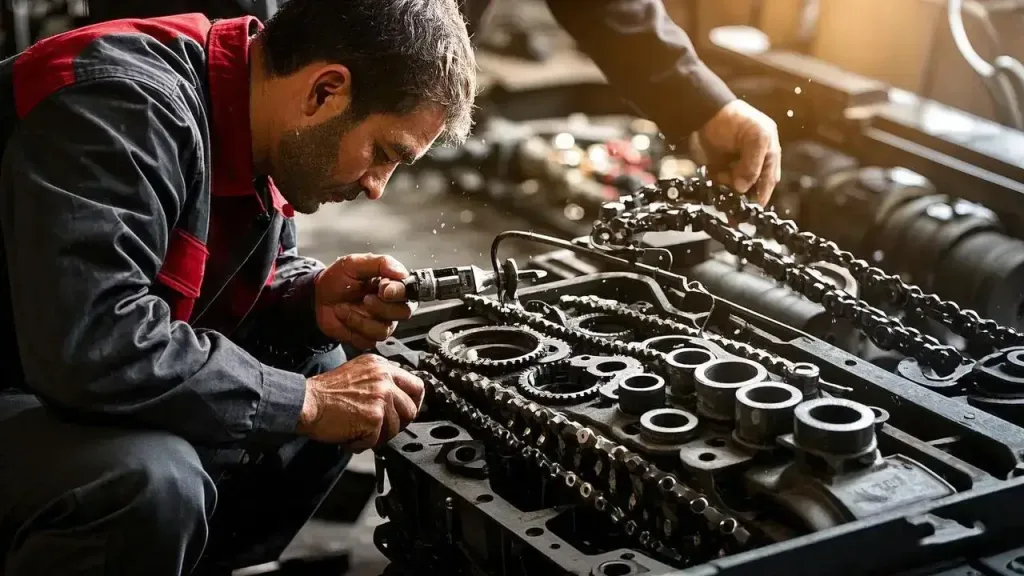
A timing chain serves the same purpose as a timing belt but is made of metal links, resembling a bicycle chain. It also synchronizes the camshaft and crankshaft, ensuring precise valve timing.
Key Characteristics:
- Material: Made of high-strength steel for durability.
- Design: A series of metal links designed to fit onto sprockets.
- Durability: Can last the lifetime of the vehicle with proper maintenance.
Advantages:
- Long Lifespan: Timing chains are durable and typically require replacement only if there is significant wear.
- Resilience: Less susceptible to heat and oil damage compared to rubber belts.
- Reliable Performance: Offers consistent and precise timing over time.
Disadvantages:
- Noisier Operation: Metal chains generate more noise, especially as they age.
- Higher Cost: More expensive to manufacture and replace than timing belts.
- Potential for Tensioner Issues: Requires a tensioner to maintain proper tension, which can fail and lead to problems.
Comparison: Timing Belt vs. Timing Chain
When it comes to timing mechanisms, both timing belts and timing chains serve the same fundamental purpose: synchronizing the movement of the engine’s camshaft and crankshaft. However, they differ significantly in terms of materials, performance, maintenance, and overall lifespan. Let’s break down the key differences:
| Aspect | Timing Belt | Timing Chain |
| Material | Made of rubber or synthetic materials, often reinforced with fiberglass or Kevlar. | Constructed from high-strength metal links. |
| Durability | Typically lasts 60,000–100,000 miles, depending on manufacturer recommendations. | Can last the lifetime of the vehicle with proper maintenance. |
| Noise Level | Operates quietly due to its rubber composition. | Can produce noticeable noise, especially when worn or poorly maintained. |
| Cost | More affordable to manufacture and replace. | Higher upfront cost for parts and replacement labor. |
| Maintenance | Requires regular replacement based on mileage or time. | Minimal maintenance; generally replaced only in cases of significant wear or damage. |
| Resistance to Heat | More prone to wear or cracking under extreme heat. | Highly resistant to heat and oil exposure. |
| Weight | Lightweight, contributing to better fuel efficiency. | Heavier, which may slightly impact fuel efficiency. |
| Common Usage | Often found in lightweight, fuel-efficient vehicles. | Common in heavy-duty and high-performance vehicles. |
How to Choose: Timing Belt or Timing Chain?
Deciding between a timing belt and a timing chain depends on several factors, including your vehicle type, driving habits, and maintenance preferences. Here’s a guide to help you make an informed choice:
Vehicle Design
- The type of timing mechanism your vehicle uses is usually determined by the manufacturer. Most modern European cars are equipped with timing belts, while American and Japanese manufacturers often favor timing chains.
Maintenance Preferences
- If you prefer a lower initial cost but don’t mind scheduling periodic replacements, a timing belt might be the better option.
- For those who want a more durable, low-maintenance solution, a timing chain is ideal, as it typically lasts much longer.
Durability Needs
- Timing belts generally last 60,000–100,000 miles and require replacement to avoid potential engine damage.
- Timing chains, on the other hand, are designed to endure the life of the engine and rarely need replacement unless a failure occurs.
Driving Conditions
- Vehicles that operate in extreme temperature environments might benefit from a timing chain since it is more resistant to heat and oil exposure.
- Timing belts, while reliable, are more prone to wear and cracking in harsh conditions.
Performance Requirements
- Heavy-duty or high-performance engines often utilize timing chains for their durability and reliability under stress.
- Smaller, fuel-efficient vehicles tend to use timing belts, as they are lighter and quieter, contributing to overall efficiency.
Cost Considerations
- Timing belts are generally less expensive to replace but require regular maintenance, making them a recurring cost.
- Timing chains have a higher upfront cost but are more economical in the long run due to their longevity.
Common Signs of Timing Mechanism Problems
Issues with the timing mechanism, whether it’s a timing belt or a timing chain, can lead to serious engine performance problems if not addressed promptly. Here are the most common signs to watch for:
Engine Misfires
- A failing timing mechanism can cause the camshaft and crankshaft to fall out of sync, leading to misfires and a noticeable drop in engine performance.
Unusual Noises
- A worn timing chain often produces a rattling or clanking noise, while a deteriorating timing belt may create squealing or ticking sounds.
Difficulty Starting the Engine
- Problems with the timing mechanism can disrupt valve and piston synchronization, making it hard for the engine to start or run smoothly.
Check Engine Light
- A malfunctioning timing mechanism may trigger the check engine light. Diagnostics may point to timing-related errors such as camshaft or crankshaft position issues.
Oil Leaks
- A damaged or worn timing belt cover or a failing chain tensioner can lead to oil leaks, which can cause further damage if left unchecked.
Reduced Engine Power
- Improper timing can result in reduced power output, making acceleration sluggish and affecting overall performance.
Visible Wear
- If you inspect the timing belt and notice cracks, fraying, or worn teeth, it’s a clear sign that replacement is needed. For timing chains, excessive slack or visible wear on the links indicates a problem.
Expert Tips for Maintenance
Follow the Manufacturer’s Guidelines:
- Replace timing belts at the recommended interval.
- Inspect timing chains periodically for wear and proper tension.
Monitor Oil Levels:
- Low or dirty oil can accelerate wear on timing chains and tensioners.
Listen for Unusual Sounds:
- Address rattling or squealing noises promptly to prevent further damage.
Inspect Regularly:
- Include the timing mechanism in routine maintenance checks.
Use Quality Parts:
- Opt for OEM or high-quality aftermarket parts when replacing a timing belt or chain.
Frequently Asked Questions
Q1: Can I switch from a timing belt to a timing chain?
A: No, the engine design determines whether it uses a belt or chain. Switching is not practical or cost-effective.
Q2: How much does it cost to replace a timing belt or chain?
A: Timing belt replacements typically cost $500–$1,000, while timing chain replacements can range from $1,000–$2,500 due to labor-intensive installation.
Q3: What is the primary difference between a timing belt and a timing chain?
A: The main difference lies in the material. A timing belt is made of rubber or synthetic material, while a timing chain is made of durable metal links. Timing belts typically require periodic replacement, while timing chains are designed to last much longer, often the lifetime of the engine.
Q4: How do I know if my car uses a timing belt or a timing chain?
A: The easiest way is to check your vehicle’s owner’s manual or consult a trusted mechanic. Additionally, most modern vehicles with smaller or more fuel-efficient engines tend to use timing belts, whereas larger or performance-focused engines often use timing chains.
Q5: Can a timing belt or chain failure damage my engine?
A: Yes, in interference engines, a failed timing belt or chain can cause severe damage to the engine, including bent valves, damaged pistons, or even a complete engine rebuild. In non-interference engines, the engine will simply stop running without causing internal damage.
Q6: How often should I replace my timing belt?
A: Timing belts typically need to be replaced every 60,000 to 100,000 miles, depending on the manufacturer’s recommendations. Ignoring replacement intervals can result in sudden failure and costly repairs.
Q7: Do timing chains require maintenance or replacement?
A: While timing chains are more durable, they still require occasional maintenance, such as ensuring proper lubrication through regular oil changes. If a chain stretches or its tensioner fails, it may need to be replaced, although this is less common compared to timing belts.
Conclusion
Both timing belts and timing chains play a critical role in engine performance. While timing belts are quieter and less expensive upfront, timing chains offer unmatched durability and reliability. The best choice depends on your vehicle, driving habits, and maintenance preferences. Regardless of which mechanism your car uses, timely maintenance and awareness of warning signs can prevent costly repairs and keep your engine running smoothly.



Add comment