

How to Diagnose a Check Engine Light at Home
That dreaded check engine light—don’t panic! You don’t always need a mechanic to solve the mystery. Diagnosing a check engine light at home is easier than you think, and it can save you time, money, and stress. With the right tools and a little know-how, you can troubleshoot like a pro. Let’s dive into this step-by-step guide to help you decode that pesky light and get your car back on the road.
What Does the Check Engine Light Mean?
The check engine light (CEL) is part of your car’s onboard diagnostic (OBD-II) system. When it illuminates, it signals that your vehicle has detected a potential issue affecting engine performance, emissions, or other critical systems. While it doesn’t always mean an emergency, ignoring it can lead to bigger and more expensive problems over time.
Common Reasons the Check Engine Light Comes On
Several factors can trigger the check engine light, ranging from minor issues to more serious engine concerns. Some of the most common causes include:
- Loose or Faulty Gas Cap: A missing, loose, or damaged gas cap can cause fuel vapor leaks, triggering the CEL.
- Oxygen Sensor Failure: A malfunctioning oxygen sensor can lead to poor fuel efficiency and increased emissions.
- Faulty Mass Airflow (MAF) Sensor: This sensor measures the amount of air entering the engine. If it fails, it can cause rough idling, stalling, and decreased performance.
- Worn Spark Plugs or Ignition Coils: These components are essential for combustion. If they fail, the engine may misfire, reducing power and efficiency.
- Catalytic Converter Issues: A failing catalytic converter can increase emissions, lower fuel efficiency, and trigger the CEL.
Understanding the Severity of the Light
The check engine light can behave in different ways, each indicating a different level of urgency:
- Steady Light: A constant check engine light suggests a non-urgent issue, such as a faulty sensor. However, it still requires attention before it worsens.
- Flashing Light: A blinking CEL is more serious and usually indicates severe engine misfires, which can cause damage to the catalytic converter. If you see a flashing light, reduce speed and have the vehicle checked immediately.
Essential Tools and Equipment
Before diving into diagnostics, gather the necessary tools:
- OBD-II Scanner: This essential device reads diagnostic trouble codes (DTCs) from your car’s computer. Basic models display code numbers, while advanced scanners offer real-time data and troubleshooting suggestions.
- Vehicle Manual: Provides detailed information about your car’s specific systems and the location of the OBD-II port.
- Basic Tools: A flashlight, gloves, and a notebook for jotting down codes and observations.
How to Diagnose a Check Engine Light: A Step-by-Step Guide
When your check engine light turns on, it’s important to diagnose the issue as soon as possible. While it may seem intimidating, you can follow these simple steps to identify the problem and determine whether it requires immediate attention or a minor fix.
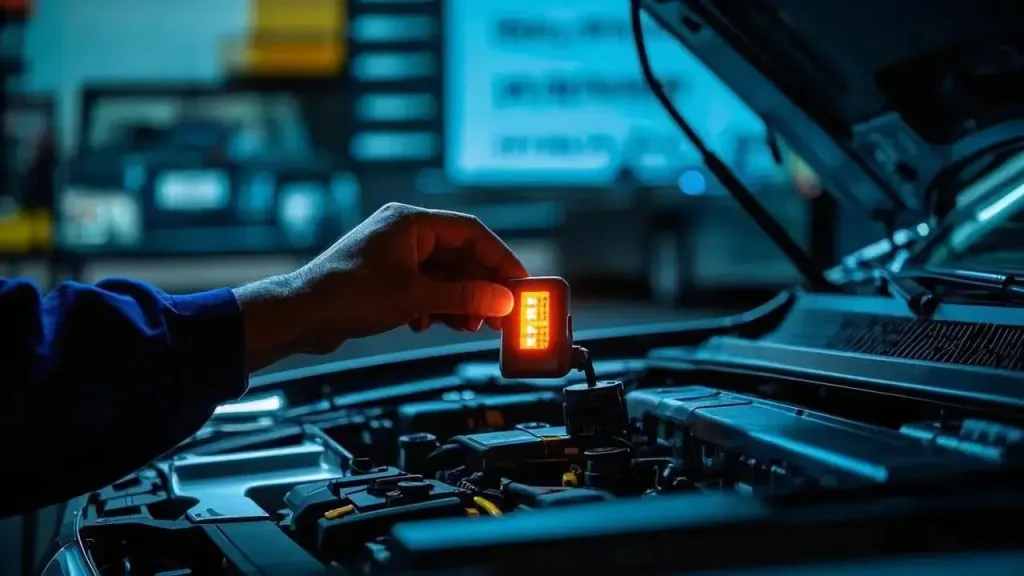
Step 1: Locate the OBD-II Port
Every vehicle manufactured after 1996 is equipped with an onboard diagnostics (OBD-II) system. The OBD-II port is usually found under the dashboard on the driver’s side, near the steering column. If you have trouble finding it, refer to your vehicle’s owner’s manual.
Step 2: Connect an OBD-II Scanner
To retrieve trouble codes from the vehicle’s computer system, plug an OBD-II scanner into the port. Turn the ignition key to the “On” position (without starting the engine) and allow the scanner to establish a connection.
Step 3: Retrieve and Record Trouble Codes
Once connected, the scanner will display diagnostic trouble codes (DTCs), usually in a format like “P0301” or “P0420.” These codes correspond to specific issues within the engine or emissions system. Write them down or save them using the scanner’s memory function.
Step 4: Interpret the Trouble Codes
Use your scanner’s built-in database or an online reference guide to determine what each code means. Some scanners provide a brief description, while others require manual lookup. For more detailed insights, check your vehicle’s repair manual or manufacturer’s website.
Step 5: Perform a Visual Inspection
Before jumping to repairs, conduct a simple visual check for common problems:
- Ensure the gas cap is tightly secured, as a loose cap can trigger the CEL.
- Look for damaged or disconnected hoses in the engine bay.
- Inspect for loose, corroded, or damaged wiring around sensors.
Step 6: Address the Identified Issue
Once you’ve identified the likely cause, take action:
- If the gas cap is loose, tighten it and reset the light.
- If the issue involves sensors, spark plugs, or other minor components, consider replacing them.
- For more complex problems (e.g., catalytic converter failure), professional repair may be necessary.
Step 7: Reset the Check Engine Light
After making the necessary repairs, use the OBD-II scanner to clear the codes and reset the check engine light. If the light stays off after driving for a few days, the issue is resolved. If it comes back on, further diagnosis is required.
When to Seek Professional Help
While DIY diagnostics can resolve many minor issues, some situations require a professional mechanic:
- Flashing Check Engine Light: Indicates a severe issue, such as an engine misfire that could damage the catalytic converter.
- Persistent Codes: If the light returns after resetting, the problem may be deeper than a simple fix.
- Safety Concerns: If you’re not comfortable or the issue involves critical components like the engine or transmission, it’s best to consult a professional.
Preventive Maintenance: How to Avoid Check Engine Light Issues
The best way to deal with a check engine light is to prevent it from coming on in the first place. Regular vehicle maintenance can help you avoid unexpected breakdowns and costly repairs. Here are some key tips to keep your engine running smoothly and reduce the chances of seeing that dreaded warning light.
1. Perform Regular Diagnostic Scans
Even if your check engine light isn’t on, periodically using an OBD-II scanner can help you catch minor issues before they turn into major problems. Some scanners can monitor live data, alerting you to irregular sensor readings or emissions problems.
2. Keep Up with Routine Maintenance
Follow your vehicle’s recommended maintenance schedule, which typically includes:
- Oil Changes: Dirty or old oil can lead to engine wear and sensor malfunctions.
- Air and Fuel Filter Replacements: Clogged filters reduce engine efficiency and may trigger trouble codes.
- Spark Plug and Ignition Coil Inspections: Worn-out spark plugs or coils can cause misfires and impact performance.
3. Check the Gas Cap
A loose, cracked, or missing gas cap is one of the simplest reasons for a check engine light. Always tighten the cap after refueling, and replace it if it’s worn out to prevent fuel vapor leaks.
4. Monitor Engine Sensors
Many check engine light triggers are related to faulty sensors, such as:
- Oxygen (O2) Sensors – Monitor emissions and fuel mixture.
- Mass Airflow (MAF) Sensor – Measures air entering the engine.
- Coolant Temperature Sensor – Helps regulate engine temperature.
Cleaning or replacing these sensors as needed can prevent performance issues and improve fuel efficiency.
5. Keep an Eye on the Battery and Electrical System
Weak or failing batteries can cause voltage fluctuations, leading to false error codes and sensor failures. Ensure battery terminals are clean and corrosion-free, and replace the battery as recommended.
6. Use Quality Fuel and Fluids
Low-quality fuel can clog injectors and harm engine performance. Always use the recommended octane level and keep fuel system components clean with periodic fuel injector cleaners.
7. Address Minor Issues Immediately
If you notice rough idling, decreased fuel economy, or performance issues, don’t ignore them. Small problems can escalate quickly, leading to more serious engine trouble.
Frequently Asked Questions (FAQ) About the Check Engine Light
1. Can I Keep Driving with the Check Engine Light On?
If the light is steady, you can usually continue driving, but you should diagnose and fix the issue as soon as possible. If the light is flashing, it indicates a serious problem, such as an engine misfire, and you should stop driving immediately to prevent further damage.
2. Will a Loose Gas Cap Really Trigger the Check Engine Light?
Yes! A loose, damaged, or missing gas cap can cause a fuel vapor leak, which the car’s computer detects as an emissions issue. Try tightening the cap or replacing it if necessary.
3. How Do I Reset the Check Engine Light?
You can use an OBD-II scanner to clear the codes and reset the light. However, if the underlying issue isn’t fixed, the light will come back on after some driving.
4. How Much Does It Cost to Diagnose a Check Engine Light at a Repair Shop?
Most mechanics charge between $50 and $150 for a diagnostic scan, depending on your location and vehicle. Doing an initial scan yourself with an OBD-II scanner can save you money.
5. Can the Check Engine Light Come On for No Reason?
No, the check engine light always indicates a detected issue. However, it could be caused by a temporary glitch, such as a low battery voltage or a momentary sensor reading error. If the light goes off on its own, it may have been a minor, self-corrected issue.
6. What Should I Do If My Check Engine Light Comes On Right After a Repair?
First, check if any connectors or sensors were accidentally left unplugged during the repair. If everything looks fine, scan for new codes—sometimes, resetting the light after a repair is necessary.
7. Will My Car Fail an Emissions Test If the Check Engine Light Is On?
Yes, in most cases, a check engine light means an automatic failure on an emissions test. The issue needs to be diagnosed and fixed before retesting.
8. How Long Does It Take for the Check Engine Light to Turn Off After a Fix?
If you’ve fixed the issue, the check engine light may turn off after a few driving cycles (usually 50-100 miles). If it doesn’t, you may need to manually reset it using an OBD-II scanner.
Conclusion
Diagnosing your check engine light at home is a valuable skill that can save you money and give you deeper insight into your vehicle’s health. By following the steps outlined above—from connecting an OBD-II scanner to interpreting diagnostic codes and performing basic troubleshooting—you empower yourself to tackle minor issues before they turn into costly repairs.
Remember, while DIY diagnostics can be effective for many common problems, don’t hesitate to call a professional if the issue persists or if safety is a concern. Regular maintenance and vigilance are the keys to a long-lasting, reliable vehicle.



Add comment