

8 Common Causes of Rough Idle
If you’ve ever been at a red light or sitting in traffic and noticed your car engine vibrating or making strange noises, you might have experienced rough idling. It’s an issue that can range from mildly annoying to a serious signal that something’s wrong with your engine. So, what causes it, and should you be worried? Let’s take a closer look at rough idling, why it happens, and how to fix it.
What Is Idling?
Before we dive into the problem, let’s first define what “idling” means. Idling occurs when your engine is running but the car is not moving. It happens when you’re stopped at a traffic light or parked with the engine running. Under normal circumstances, your engine should idle smoothly without shaking or making any strange sounds. But when things aren’t working quite right, that’s when rough idling can occur.
What Is Rough Idling?
Rough idling happens when your car’s engine has trouble maintaining a consistent RPM (revolutions per minute) while idling. You might notice the engine shaking or hear it sputtering, and in some cases, it may even stall. It’s usually a sign that something’s not quite right under the hood.
When Does Rough Idling Occur?
Rough idling can happen in a variety of situations. You might experience it:
- When you’re sitting at a stoplight
- After starting your car, especially if it’s cold
- When you’re in neutral or park
- If the car has been running for a while and is idling in traffic or at a drive-thru
The most important thing to remember is that rough idling is typically a symptom of an underlying issue with your engine or fuel system. It’s usually best to address it sooner rather than later to avoid further damage.
Diagnosing a Rough Idle Is Easier Than It Used to Be
In the past, diagnosing the cause of rough idling could be a complicated and time-consuming task. However, with modern cars, things have gotten a lot easier. Cars today are equipped with onboard diagnostic (OBD) systems that can help pinpoint the issue. Mechanics can plug a scanner into your car’s computer and get a readout of error codes that tell them exactly where to look.
But even without the scanner, there are a few common symptoms and causes you can look out for.
What Causes Rough Idle In My Car?
So, what exactly causes a rough idle? There are many factors, ranging from simple issues to more complex mechanical problems. Here are the top 8 causes:
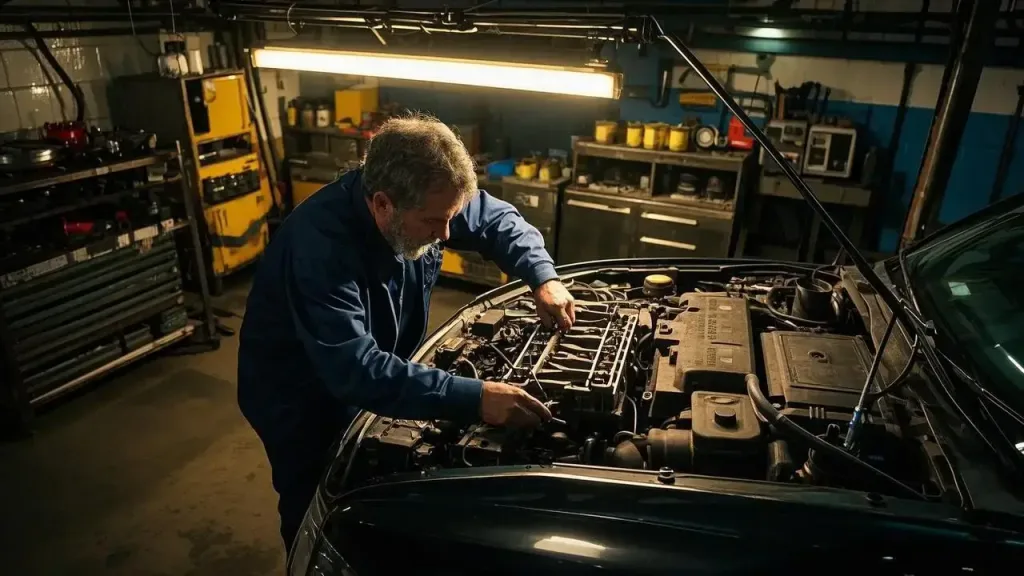
Dirty or Faulty Idle Air Control Valve (IAC)
The IAC valve controls the airflow into the engine at idle. If it gets clogged with dirt, carbon deposits, or malfunctions, it can cause your engine to idle roughly. A mechanic can clean or replace this valve to get things back on track.
Vacuum Leaks
The vacuum system plays a vital role in controlling air pressure and engine performance. A vacuum leak—whether from cracked hoses, loose connections, or damaged gaskets—can cause unregulated air to enter the engine, leading to a rough idle.
Worn Spark Plugs
Spark plugs ignite the fuel-air mixture in the engine’s cylinders. Over time, spark plugs wear out or become fouled, leading to poor ignition and causing the engine to run rough at idle. Replacing spark plugs is an easy fix that can improve performance.
Faulty Fuel Injectors
Fuel injectors spray fuel into the engine’s cylinders for combustion. If they’re clogged or malfunctioning, the fuel mix can become too rich or too lean, leading to an uneven idle. Cleaning or replacing the fuel injectors can resolve this issue.
Dirty Air Filter
A clogged or dirty air filter restricts airflow to the engine, disrupting the air-fuel mixture and leading to rough idling. Replacing a dirty air filter is a simple and inexpensive solution to improve engine performance.
Bad Fuel Pressure Regulator
The fuel pressure regulator ensures that the right amount of fuel is delivered to the engine. A malfunctioning regulator can cause erratic fuel pressure, leading to rough idling. Replacing the faulty regulator restores smooth engine operation.
Engine Timing Issues
If the timing of the engine’s components (like the camshaft or crankshaft) is off, the engine can run unevenly at idle. Timing issues may be caused by a worn-out timing belt, a loose timing chain, or a malfunctioning timing sensor. Fixing the timing will usually require a mechanic’s expertise.
Clogged or Dirty Fuel Filter
A clogged fuel filter prevents fuel from reaching the engine in the right amount, causing the engine to sputter and idle roughly. Replacing the fuel filter is a straightforward fix and an essential part of regular maintenance.
Some Other Causes of a Rough Idle
Besides the 8 most common causes, there are other possible reasons for a rough idle, such as:
- Low or Poor-Quality Fuel: Old or contaminated fuel can cause combustion issues, leading to rough idling.
- Faulty Sensors: Issues with components like the Mass Airflow Sensor (MAF) or Oxygen Sensors can affect engine performance.
- Exhaust Leaks: An exhaust leak can interfere with the engine’s airflow, causing irregular idling.
- Dirty Throttle Body: The throttle body controls the air intake to the engine. If it’s clogged with carbon or grime, it can lead to an unstable idle.
How Important Is It To Service or Repair a Car That Has a Rough Running Idle?
It’s crucial to address a rough idle as soon as you notice it. A rough idle can often be the first indicator of a more severe issue. Ignoring the problem can lead to further engine damage, decreased fuel efficiency, and costly repairs down the road. It’s also an inconvenience that can make driving uncomfortable or even dangerous if the car stalls.
What Your Mechanic Will Do to Fix Your Rough Idle
If you take your car to a mechanic for a rough idle, they will typically:
- Perform a Diagnostic Scan: Using an OBD scanner, they’ll check for error codes and assess engine performance.
- Inspect the Ignition System: Spark plugs, coils, and wires will be checked for wear and performance issues.
- Check the Fuel System: Fuel injectors, the fuel pressure regulator, and fuel filters will be inspected and cleaned if necessary.
- Test for Vacuum Leaks: Mechanics will inspect vacuum hoses, gaskets, and connections to ensure no air is leaking into the engine.
- Clean or Replace Parts: If necessary, the mechanic will clean or replace parts like the idle air control valve, throttle body, or air filter.
Once they identify the cause, your mechanic will provide a solution, from cleaning or replacing parts to adjusting engine timing. With proper attention, your car will be idling smoothly again in no time!
Conclusion
Rough idling is more than just an annoying sound—it can be a sign of underlying issues with your engine. By diagnosing and fixing the problem early, you can avoid more expensive repairs and keep your car running smoothly. Remember, if you’re not sure what’s causing the rough idle, don’t hesitate to take it to a trusted mechanic. They’ll help get your ride back to its smooth, purring self.



One comment
พีจีสล็อต
มุมมองของคุณน่าสนใจจริงๆ, มีข้อมูลใหม่ที่ฉันไม่เคยรู้มาก่อน.
My blog – พีจีสล็อต