

What is an Exhaust Camshaft?
The exhaust camshaft is a critical component of an internal combustion engine, responsible for controlling the opening and closing of the exhaust valves. By regulating the timing and duration of these events, the camshaft ensures that exhaust gases are efficiently expelled from the engine’s cylinders. This process is vital for maintaining optimal engine performance, fuel efficiency, and emissions compliance.
How Does an Exhaust Camshaft Work?
The exhaust camshaft operates in sync with the engine’s crankshaft via a timing belt, chain, or gear system. Its primary function is to actuate the exhaust valves, allowing spent gases to exit the combustion chamber after the power stroke.
The camshaft features lobes—raised, egg-shaped sections—that push on the valve lifters or rocker arms, forcing the valves to open. The shape and position of the lobes determine the valve timing and lift, both of which are crucial for proper engine operation.
Key Components of an Exhaust Camshaft
- Cam Lobes: Control the valve opening and closing.
- Journal Bearings: Provide smooth rotation within the engine block.
- Timing Gear or Sprocket: Connects to the crankshaft for synchronized operation.
- Rocker Arms or Lifters: Transmit motion from the cam lobes to the valves.
- Valve Springs: Ensure the valves close securely after being opened.
Types of Camshafts and Their Applications
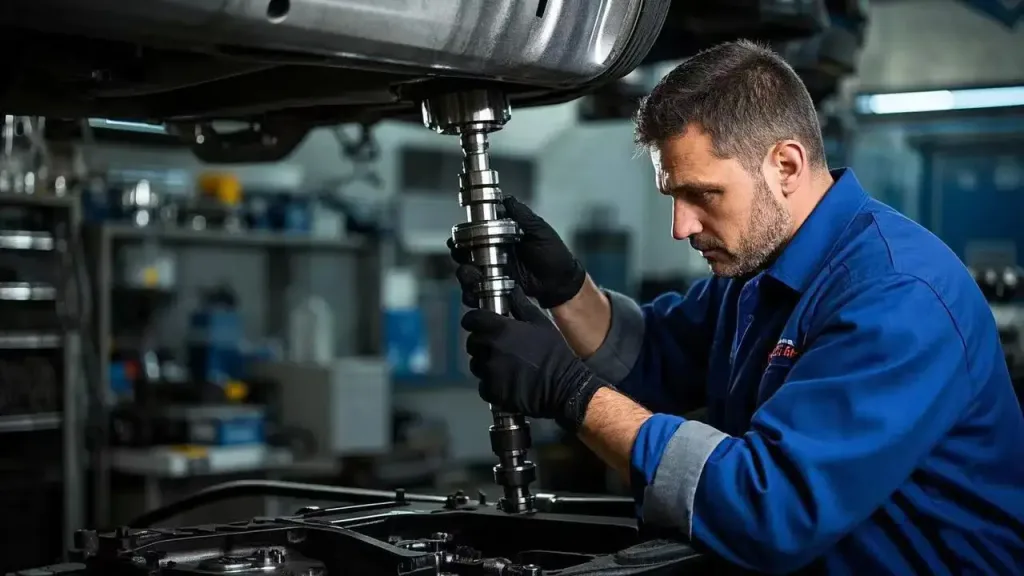
Camshafts are a vital component of an engine, designed to control valve timing and ensure optimal combustion. Different types of camshafts are used depending on the engine’s design and intended application. Below are the most common types of camshafts and their respective applications:
1. Flat Tappet Camshafts
Flat tappet camshafts are widely used in older vehicles and engines designed for basic functionality. They feature a simple lobe design that interacts with flat-faced lifters.
Applications: Suitable for classic cars, entry-level performance builds, and budget engine rebuilds.
Advantages: Cost-effective and easy to install.
Drawbacks: Requires regular maintenance and proper lubrication to prevent premature wear.
2. Roller Camshafts
Roller camshafts use roller lifters that reduce friction and allow for more aggressive cam profiles. They are popular in modern and high-performance engines.
Applications: High-performance vehicles, race cars, and modern production engines.
Advantages: Improved durability, higher RPM potential, and increased valve lift without compromising reliability.
Drawbacks: More expensive than flat tappet camshafts.
3. Hydraulic Camshafts
Hydraulic camshafts feature lifters that automatically adjust for valve lash, reducing the need for manual adjustments.
Applications: Common in everyday passenger cars and light trucks.
Advantages: Quiet operation and low maintenance.
Drawbacks: Limited performance potential compared to solid lifter camshafts.
4. Solid Lifters (Mechanical) Camshafts
Solid lifter camshafts require manual adjustment to maintain the correct valve lash but offer superior precision for high-performance applications.
Applications: Race engines, vintage performance builds, and high-RPM engines.
Advantages: Precise valve control and high RPM capability.
Drawbacks: Requires frequent maintenance and adjustments.
5. Overhead Cam (OHC) Camshafts
Overhead camshafts are mounted directly above the valves, eliminating the need for pushrods. This design allows for more accurate valve timing and higher engine efficiency.
Applications: Modern engines, high-performance sports cars, and motorcycles.
Advantages: Reduced engine weight, improved valve control, and higher RPM potential.
Drawbacks: More complex and costly to manufacture and service.
6. Dual Overhead Cam (DOHC) Camshafts
DOHC engines use two camshafts per cylinder head—one for the intake valves and one for the exhaust valves. This configuration enables precise control over valve timing and overlap.
Applications: High-performance and modern multi-valve engines.
Advantages: Enhanced performance, better fuel efficiency, and superior airflow.
Drawbacks: Increased complexity and cost.
What is the Difference Between Intake and Exhaust Camshafts?
The intake and exhaust camshafts serve distinct yet complementary roles in an internal combustion engine. While both are critical for managing the engine’s four-stroke cycle, their designs and functions differ significantly. Below is a detailed comparison of the two:
| Feature | Intake Camshaft | Exhaust Camshaft |
| Function | Controls the opening and closing of intake valves to allow air and fuel mixture into the combustion chamber. | Regulates the opening and closing of exhaust valves to expel burnt gases from the combustion chamber. |
| Lobe Design | Optimized for smooth air and fuel entry, typically with more aggressive lift for better airflow. | Designed for efficient gas expulsion, often with slightly less lift compared to intake lobes. |
| Valve Timing | Intake valves open just before the piston reaches top dead center (TDC) during the intake stroke. | Exhaust valves close just after the piston passes bottom dead center (BDC) during the exhaust stroke. |
| Role in Engine Performance | Impacts fuel-air mixture efficiency and power generation. | Affects the removal of waste gases, ensuring clean combustion cycles. |
| Material and Durability | Often made from hardened steel or cast iron to withstand high pressure and temperature from incoming air and fuel. | Requires similar durability to endure hot, corrosive exhaust gases. |
Key Differences in Operation
Airflow Direction: The intake camshaft ensures a steady flow of fresh air and fuel into the engine, whereas the exhaust camshaft expels waste gases to prepare for the next cycle.
Timing Overlap: During high-performance tuning, the intake and exhaust valves may briefly open simultaneously (valve overlap) to improve airflow dynamics. This requires precise synchronization of both camshafts.
Signs of a Failing Exhaust Camshaft
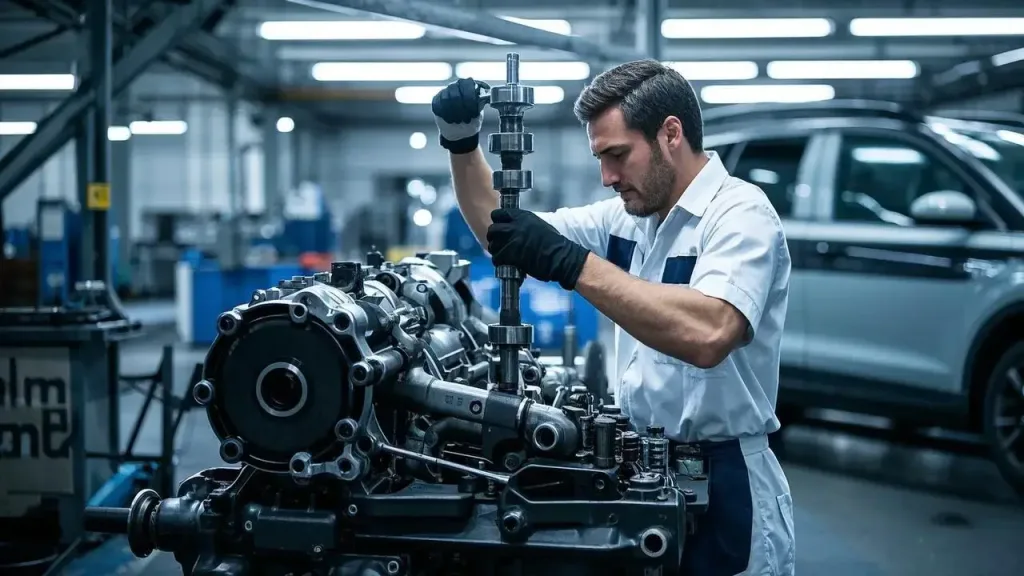
A failing exhaust camshaft can cause a variety of engine problems, ranging from reduced performance to serious mechanical damage if not addressed promptly. Below are the common signs to watch for:
1. Engine Misfires
Misfires occur when the exhaust valves fail to open or close properly, disrupting the engine’s combustion process. This can lead to uneven power delivery and rough idling.
2. Reduced Engine Power
A failing exhaust camshaft may prevent efficient expulsion of exhaust gases, causing backpressure and a noticeable drop in engine power and acceleration.
3. Unusual Noises
Ticking, knocking, or tapping sounds from the engine bay can indicate worn camshaft lobes or damaged lifters. These noises often increase with engine speed.
4. Excessive Exhaust Smoke
Improper valve timing due to a faulty exhaust camshaft can result in incomplete combustion, leading to excessive or dark exhaust smoke.
5. Poor Fuel Efficiency
When exhaust gases are not expelled efficiently, the engine must work harder to complete the combustion cycle, increasing fuel consumption.
6. Check Engine Light
Modern vehicles use sensors to monitor camshaft position and timing. A failing exhaust camshaft may trigger the check engine light, often accompanied by diagnostic trouble codes (DTCs) related to camshaft timing or position.
7. Oil Contamination or Leaks
A damaged camshaft seal or worn bearings can lead to oil leaks or contamination, further impacting engine performance and longevity.
Preventive Measures and Diagnosis
Regular Maintenance: Periodically inspect the camshaft and related components during routine engine servicing.
Listen for Noises: Pay attention to unusual sounds that could signal early wear.
Check Engine Light Scans: Use an OBD-II scanner to identify potential issues with camshaft sensors or timing systems.
By recognizing these signs early and addressing them promptly, you can prevent costly repairs and ensure your engine continues to operate smoothly.
When Should You Replace an Exhaust Camshaft?
Replacing an exhaust camshaft is typically necessary if:
- There is significant wear or damage to the lobes.
- The engine experiences consistent performance issues despite other repairs.
- The timing system fails, causing misalignment or valve damage.
Regular inspections during major engine services can help identify early signs of camshaft wear.
How to Remove an Exhaust Camshaft
Removing an exhaust camshaft is a delicate process that requires proper tools, patience, and attention to detail. Follow these steps to safely and effectively remove the camshaft from your engine:
Step 1: Prepare the Work Area
Park the vehicle on a flat, stable surface and engage the parking brake.
Disconnect the negative terminal of the battery to prevent accidental electrical shorts.
Gather necessary tools, including a socket set, torque wrench, camshaft locking tool, and a repair manual for your specific vehicle.
Step 2: Remove Engine Components
Access the Engine: Open the hood and remove any components obstructing access to the camshaft, such as the engine cover and air intake system.
Drain Engine Oil: Place an oil pan under the vehicle and drain the engine oil to prevent spillage when removing the camshaft.
Remove Valve Cover: Carefully unbolt and remove the valve cover to expose the camshaft and related components.
Step 3: Mark Timing Positions
Use a marker or chalk to clearly mark the positions of the timing belt or chain and camshaft sprocket to ensure proper reinstallation.
Rotate the engine manually to align the timing marks as specified in the repair manual.
Step 4: Remove Timing Belt or Chain
Loosen the tensioner and carefully remove the timing belt or chain from the camshaft sprocket. Ensure it’s securely held in place to prevent misalignment.
Step 5: Unbolt the Camshaft
Loosen the camshaft bearing caps in a crisscross pattern to avoid warping the camshaft. Remove the caps and set them aside in order.
Gently lift the camshaft out of its housing, taking care not to damage the bearings or lobes.
Step 6: Inspect Components
Inspect the camshaft for wear, scoring, or damage. Also, check the bearings and seals for signs of wear or leaks.
Tips for Reinstallation
Clean all components thoroughly before reinstallation.
Apply engine assembly lube to the camshaft and bearings for smooth operation.
Follow the manufacturer’s torque specifications when tightening the bearing caps and reassembling the engine.
Frequently Asked Questions
1. What causes an exhaust camshaft to fail?
Exhaust camshaft failure is often caused by wear and tear due to insufficient lubrication, improper valve timing, or excessive heat. Poor maintenance, such as infrequent oil changes, can also accelerate wear.
2. How can I tell if my exhaust camshaft needs replacement?
Signs like engine misfires, reduced power, unusual engine noises, and excessive exhaust smoke indicate potential camshaft failure. If the check engine light is on, it’s best to perform a diagnostic scan.
3. Can I drive with a damaged exhaust camshaft?
Driving with a damaged camshaft is not recommended. It can lead to further engine damage, reduced fuel efficiency, and potentially costly repairs if left unaddressed.
4. What’s the average cost of replacing an exhaust camshaft?
The cost varies depending on the vehicle make and model, labor rates, and parts quality. On average, camshaft replacement can range from $500 to $1,500.
5. Is it possible to repair a damaged camshaft instead of replacing it?
In some cases, minor damage to a camshaft, such as scoring or pitting, can be repaired by regrinding. However, severe wear or broken lobes typically require a full replacement.
Find Reliable Exhaust Camshafts for Your Car
When searching for a high-quality exhaust camshaft, look no further than WanasignAuto. Renowned for their precision engineering and durability, WanasignAuto camshafts are designed to meet or exceed OEM standards, ensuring optimal performance and longevity for your engine.
WanasignAuto offers a wide range of camshafts suitable for various vehicle makes and models. Each camshaft is rigorously tested for strength, wear resistance, and compatibility, providing a reliable solution for both everyday drivers and high-performance enthusiasts.
Choosing WanasignAuto means investing in top-tier quality and customer support. Our team of experts is available to help you select the right camshaft for your specific needs, ensuring a seamless repair or upgrade process. Trust WanasignAuto for all your camshaft requirements and experience the difference in engine performance and reliability.



Add comment