

5 Common Warning Signs of Failing Piston Rings
Engines are the heart of any vehicle, and every part has a specific role to play in keeping it running smoothly. Among these, piston rings are vital yet often overlooked components that maintain proper engine function. When these small but critical parts start to fail, your car may exhibit various warning signs that can escalate into severe engine damage if left unchecked.
Recognizing these signs early can save you from costly repairs and keep your vehicle performing at its best. In this guide, we’ll break down the five most common signs of failing piston rings, discuss their importance, and explore what steps to take when they show signs of wear.
Why Are Piston Rings Important?
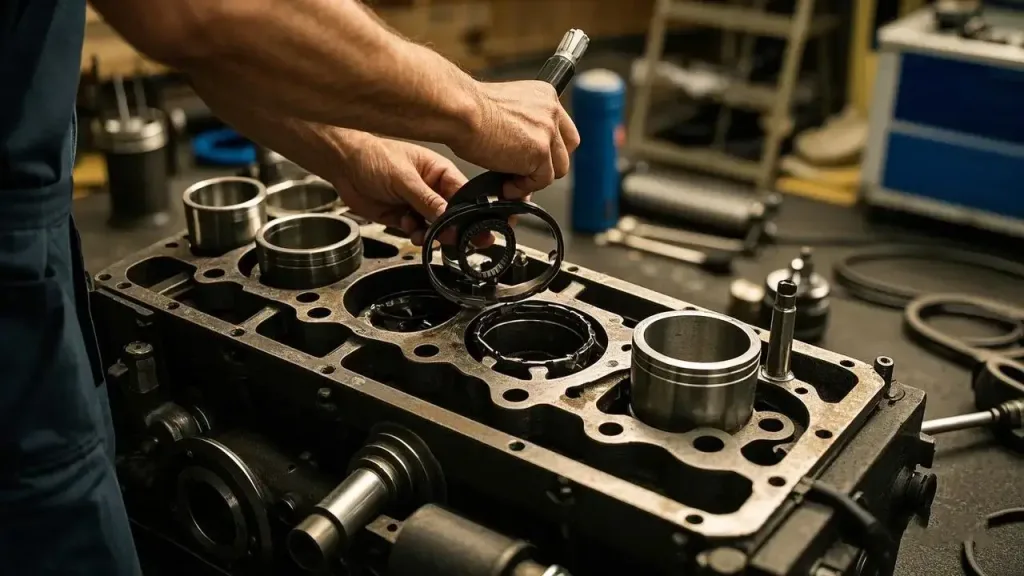
Piston rings are small metal bands fitted around the pistons inside your engine. Their primary job is to ensure a tight seal between the piston and the cylinder wall, preventing the escape of gases during combustion. Without piston rings, your engine wouldn’t be able to generate the necessary compression or maintain proper oil control.
Functions of Piston Rings
Sealing the Combustion Chamber
Piston rings create an airtight seal that keeps the fuel-air mixture inside the combustion chamber. This allows for efficient combustion and maximized engine performance.
Oil Regulation
They prevent engine oil from leaking into the combustion chamber, ensuring that the engine operates smoothly without burning excess oil.
Heat Transfer
Piston rings facilitate the transfer of heat from the pistons to the cylinder walls, preventing the engine from overheating.
Without functioning piston rings, your engine’s efficiency would plummet, leading to poor performance, higher emissions, and increased wear on other components.
5 Signs It’s Time to Replace Your Piston Rings
When piston rings fail, the symptoms often appear gradually but worsen over time. Here are five of the most common warning signs to watch for:
1. Excessive Oil Consumption
One of the earliest and most noticeable symptoms of failing piston rings is a rapid increase in oil consumption. If you find yourself frequently topping off your oil, this could indicate that the piston rings are no longer sealing the combustion chamber effectively.
Why Does This Happen?
Worn or damaged piston rings allow engine oil to seep past the pistons and into the combustion chamber. Once there, the oil burns along with the fuel, reducing the overall oil level.
How to Identify It
- Regularly check your oil levels. If you notice a steady drop, even without visible leaks, the rings may be the culprit.
- Monitor your exhaust. If oil is burning, you may notice blue smoke (a sign we’ll explore further).
Ignoring this sign can lead to severe engine damage due to insufficient lubrication.
2. Blue Smoke from the Exhaust
Have you noticed blue or bluish-grey smoke coming out of your car’s exhaust? This is another telltale sign of piston ring failure. Blue smoke indicates that engine oil is entering and burning in the combustion chamber.
Why Does Blue Smoke Occur?
Damaged or worn piston rings allow oil to bypass the seal and mix with the air-fuel mixture. When this happens, the oil burns, creating the characteristic blue smoke.
What to Look For
- A persistent blue haze when your engine is running, especially during acceleration or after idling.
- An oily smell accompanying the smoke.
If left unresolved, this issue can cause damage to your catalytic converter and lead to more costly repairs.
3. Loss of Power and Poor Engine Performance
A noticeable drop in engine power can also point to failing piston rings. This symptom is often due to a loss of compression, which is critical for generating power in an internal combustion engine.
How Does This Affect Performance?
When piston rings fail, they can no longer maintain the proper seal needed for compression. This reduces the engine’s ability to convert fuel into energy efficiently.
Signs to Watch For
- Sluggish acceleration.
- A decrease in fuel efficiency.
- Difficulty climbing hills or maintaining speed under load.
Performing a compression test can confirm if low compression is the root cause of the problem.
4. Abnormal Engine Noise
A healthy engine runs smoothly and quietly, but damaged piston rings can lead to unusual noises. These sounds occur because the pistons are no longer properly aligned with the cylinder walls.
Common Noises
- Clinking or knocking sounds, especially when starting the engine or accelerating.
- A metallic rattling noise indicating excessive piston movement.
These noises may also indicate other engine issues, so it’s important to have a mechanic perform a thorough inspection.
5. Low Compression Levels
Low compression in one or more cylinders is a surefire sign of piston ring problems. Compression is essential for engine power, and any reduction can significantly impact performance.
Testing for Low Compression
A mechanic can perform a compression test to measure the pressure in each cylinder. If the readings are below the manufacturer’s specifications, it’s likely due to worn piston rings.
Effects of Low Compression
- Poor fuel economy.
- Hard starts or engine misfires.
- Increased emissions.
Is It Safe to Drive With Damaged Piston Rings?
While it might be tempting to continue driving with damaged piston rings, doing so can lead to severe consequences. Here’s why:
Increased Engine Wear
Without proper sealing, your engine components are exposed to additional wear and tear, which can lead to complete engine failure over time.
Potential Overheating
Damaged piston rings reduce heat transfer efficiency, increasing the risk of engine overheating.
Costly Repairs
Ignoring the problem may result in damage to the pistons, cylinders, and other critical engine parts, leading to expensive repairs or even a full engine replacement.
It’s always better to address the issue sooner rather than later to avoid further complications.
How Much Does It Cost to Replace Piston Rings?
The cost of replacing piston rings can vary widely depending on several factors, including the make and model of your vehicle, labor costs, and the extent of the damage.
Estimated Costs
- Labor Costs: Replacing piston rings is labor-intensive and can take several hours, often accounting for a significant portion of the total cost. Expect to pay between $1,000 and $2,500 for labor.
- Parts Costs: The piston rings themselves are relatively inexpensive, typically ranging from $50 to $200.
DIY vs. Professional Repair
While it’s possible to replace piston rings yourself, the process requires advanced mechanical skills and specialized tools. For most drivers, professional repair is the safest and most reliable option.
Conclusion
Recognizing the warning signs of failing piston rings early can save you from costly repairs and keep your vehicle running smoothly. Whether it’s excessive oil consumption, blue smoke, or a drop in engine performance, addressing these issues promptly is key to maintaining your engine’s health.
FAQs
1. Can bad piston rings ruin an engine?
Yes, if left unaddressed, bad piston rings can cause severe damage to the engine, including cylinder wear and overheating.
2. What happens if I ignore piston ring damage?
Ignoring piston ring damage can lead to increased oil consumption, reduced performance, and eventual engine failure.
3. How long do piston rings typically last?
With proper maintenance, piston rings can last up to 100,000 miles or more.
4. Can I fix piston rings without replacing them?
In some cases, cleaning or using an oil additive may temporarily improve performance, but replacement is usually necessary for long-term results.
5. How do I prevent piston ring failure in the future?
Regular oil changes, proper engine maintenance, and avoiding overheating are key to preventing piston ring failure.



One comment
Methamphetamine
Wow that was strange. I just wrote an incredibly long comment but
after I clicked submit my comment didn’t show up. Grrrr…
well I’m not writing all that over again. Regardless, just wanted to say superb
blog!